Why Did My Macarons Crack? Common Causes
Disclosure: Some of the links in this post are affiliate links. This means if you click on the link and purchase an item, I will receive an affiliate commission at no extra cost to you.
Macarons can look effortless in photographs, but achieving smooth shells requires careful attention to several small details. A batch can emerge from the oven with beautiful feet one day and cracked tops the next. Cracks often come from problems with the meringue, macaronage, resting time, oven temperature, or moisture. Understanding what went wrong makes troubleshooting much easier and takes away some of the frustration that comes with learning this delicate dessert.
If you are still learning the fundamentals, The Complete Beginner’s Guide to French Macarons provides a helpful foundation before you start changing individual techniques. Macarons also offer an interesting introduction to Different Types of Pastries, especially when you begin comparing their textures, preparation methods, and finishing techniques with other delicate baked goods.
This guide explains the most common reasons macarons crack and how to correct each problem. You will learn how meringue strength, almond flour, batter consistency, air bubbles, drying, oven heat, and humidity can affect the final shells. With a few controlled adjustments, your next batch can become smoother, more even, and much more reliable.
Why Did My Macarons Crack?
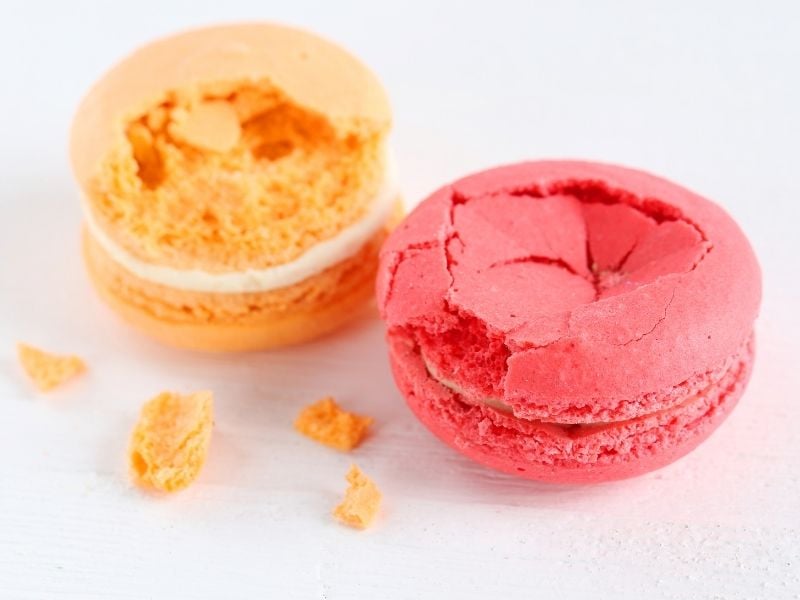
Cracked macaron shells can be one of the most frustrating problems for a home baker.
You carefully measure every ingredient.
You whip the egg whites.
You fold the batter.
You pipe neat circles onto the baking sheet.
Then the oven door opens, and the smooth shells you expected have large cracks across the tops.
The good news is that cracked macarons usually leave clues.
The location, size, and appearance of the cracks can tell you a lot about what happened during preparation or baking.
Macarons are particularly sensitive because their structure depends on several stages working together.
The meringue needs enough stability.
The almond mixture needs the correct consistency.
The shells need adequate resting time.
The oven needs controlled heat.
Even small changes can affect the final result.
Learning to identify these issues is part of becoming a more confident baker.
What Should a Good Macaron Shell Look Like?
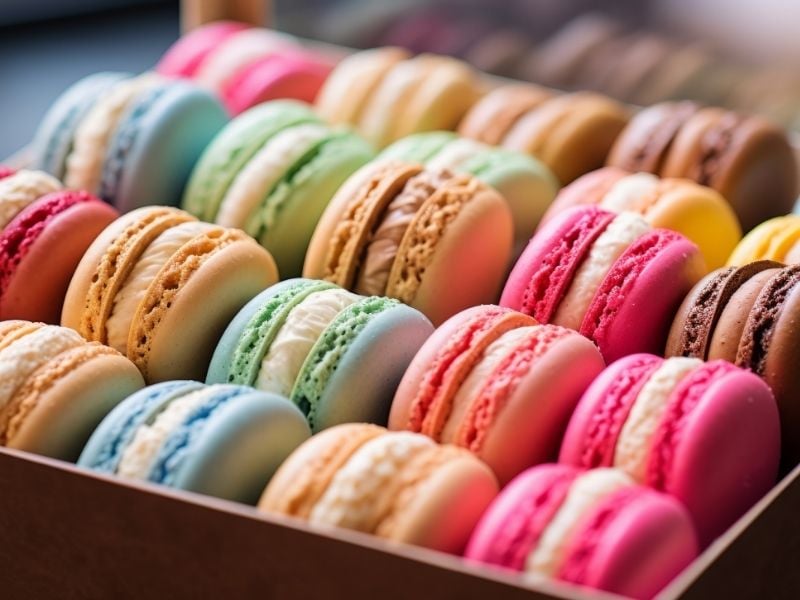
Before troubleshooting cracks, it helps to understand the result you are trying to achieve.
A well-baked macaron usually has a smooth, relatively flat top.
The shell should have a defined edge and a characteristic ruffled base called the foot.
The surface should not look excessively lumpy.
It should also have enough structure to hold the filling without collapsing.
The inside should have a delicate texture rather than a completely hollow center.
Some variation is normal.
Home ovens, ingredients, humidity, and individual recipes can produce slightly different results.
The goal is consistency rather than absolute perfection.
Accurate measurements are especially important with macarons because the ingredient ratios are sensitive. Baking Measurements Conversion Chart (Cups, Grams, Ounces Explained) can help you understand why weighing ingredients is preferable when working with precise recipes.
Why Did My Macarons Crack? Common Causes
1. Your Meringue Was Not Stable Enough
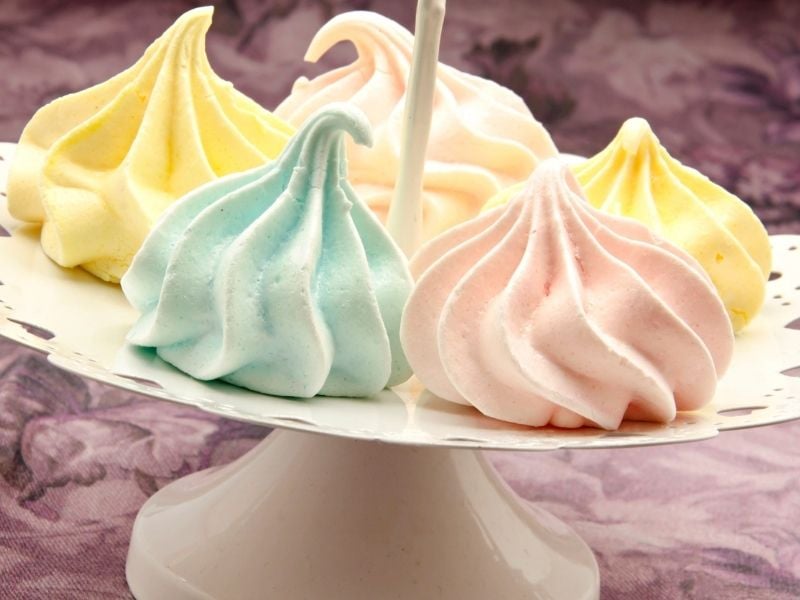
One of the biggest causes of cracked macarons is an unstable meringue.
Egg whites need to be whipped properly before the dry ingredients are incorporated.
Under-whipped egg whites may not provide enough structure.
The resulting batter can spread too much and struggle to form a stable shell.
Over-whipping can also create problems.
Extremely stiff or dry meringue can make the batter difficult to incorporate smoothly.
You want a meringue that is glossy and stable.
The peaks should hold their shape without looking dry or grainy.
Add sugar gradually according to your recipe.
Do not rush the whipping process.
The correct meringue stage gives the macaron batter a strong foundation.
If you are still developing your general baking technique, Easy Baking Skills Every Home Baker Should Master First can help strengthen the basic skills that transfer across many recipes.
2. You Overmixed the Macaron Batter
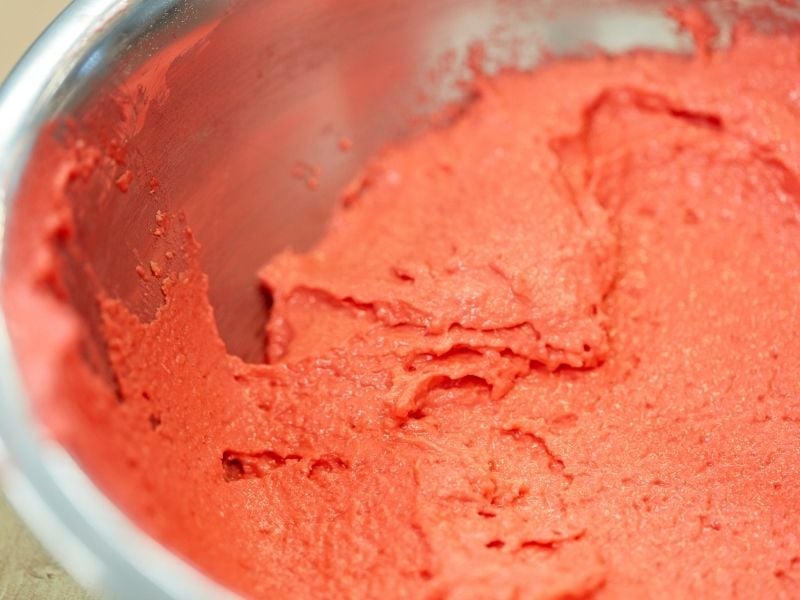
Macaronage is one of the most important steps in the process.
This is where the dry ingredients are folded into the meringue.
The goal is to remove some of the air while creating a smooth, flowing batter.
Overmixing can make the batter too thin.
Once the structure becomes too weak, the piped shells may spread excessively.
They can also lose their ability to form a stable surface.
The batter should flow smoothly but still have enough body to hold its shape after piping.
Avoid folding simply because the recipe says to fold a certain number of times.
The number of folds can vary depending on your technique and ingredient proportions.
Pay attention to the batter itself.
3. You Undermixed the Batter
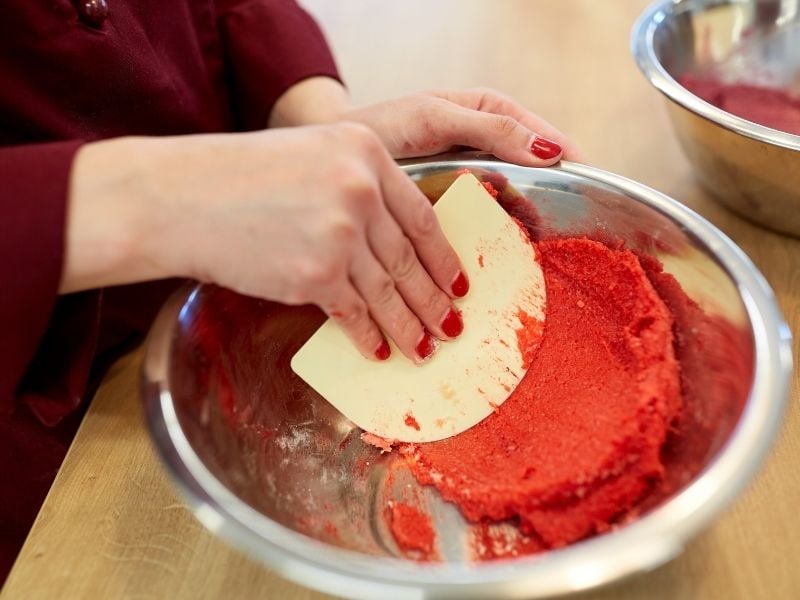
Under-mixing creates a different problem.
The batter can remain too thick and contain too much trapped air.
Those air pockets may expand in the oven.
As the internal pressure increases, the surface can crack.
Under-mixed batter may also produce rough or uneven shells.
When you pipe it, the batter might form peaks that refuse to settle.
Macaronage should gradually transform the mixture into a smoother consistency.
The batter should eventually settle after piping.
If you are unsure about terminology used in recipes, Baking Terms Explained (Fold, Cream, Knead & More For Beginners) can help clarify common baking instructions.
4. You Left Too Many Air Bubbles in the Batter
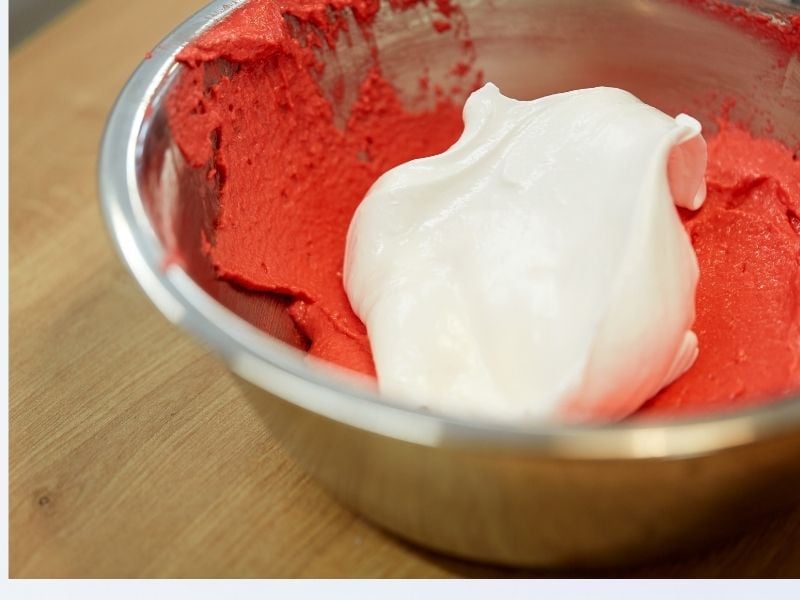
Air bubbles are another major cause of cracked shells.
When you pipe the batter, small pockets of air can remain trapped inside.
Heat causes those pockets to expand.
If the pressure cannot escape through the surface, the shell may crack.
After piping, gently tap the baking tray against your work surface.
This encourages larger air bubbles to rise.
You can then use a toothpick to pop visible bubbles.
Do this carefully.
Aggressive tapping can distort the shells.
A few controlled taps are usually enough.
Pay particular attention to visibly large bubbles near the surface.
5. Your Almond Flour Was Too Coarse
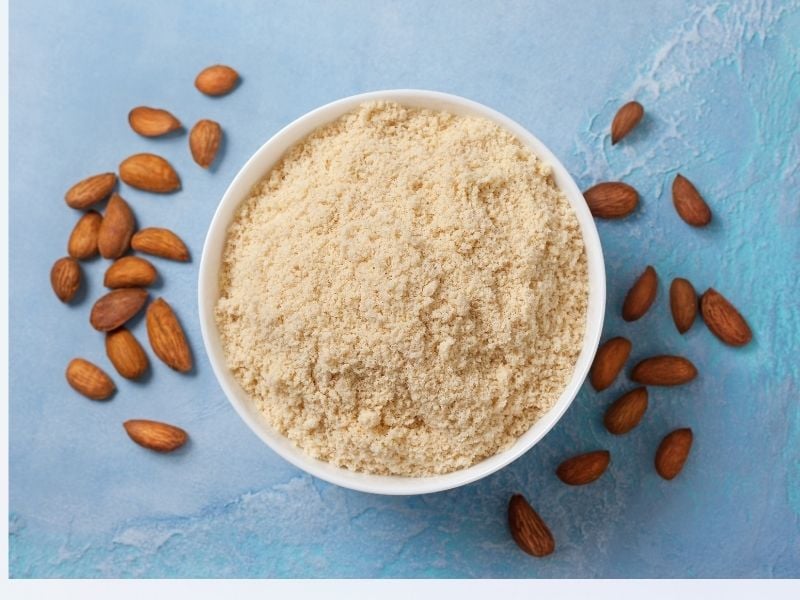
Almond flour contributes to the structure and texture of macarons.
If the almond flour is unusually coarse, it can make the batter uneven.
Larger particles can also interfere with a smooth shell.
A finer almond flour generally produces a smoother result.
Sift the almond flour with the powdered sugar according to your recipe.
If large pieces remain, do not force them through the sieve aggressively.
Remove unusually large particles.
You can also process the dry mixture carefully if your recipe and equipment allow it.
Avoid over-processing.
Excessive processing can release oils from the almonds.
Different flour varieties behave differently in baking. Types of Baking Flour and When to Use Them explains how ingredient characteristics can influence baking results.
6. You Did Not Sift the Dry Ingredients Properly
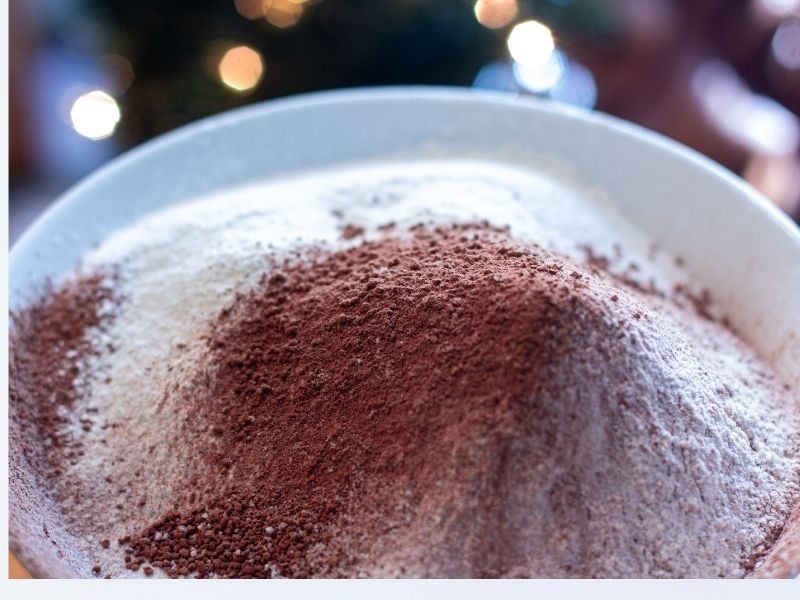
Sifting is not simply about making the ingredients look neat.
It helps break up clumps.
It also allows the almond flour and powdered sugar to combine more evenly.
Large clumps can create uneven areas in the batter.
Those areas may become weak points during baking.
A smoother dry mixture contributes to a smoother macaron batter.
Sift carefully.
Do not automatically discard a large amount of almond flour.
The goal is to remove unwanted lumps while maintaining the recipe’s intended proportions.
7. Your Macarons Needed More Resting Time
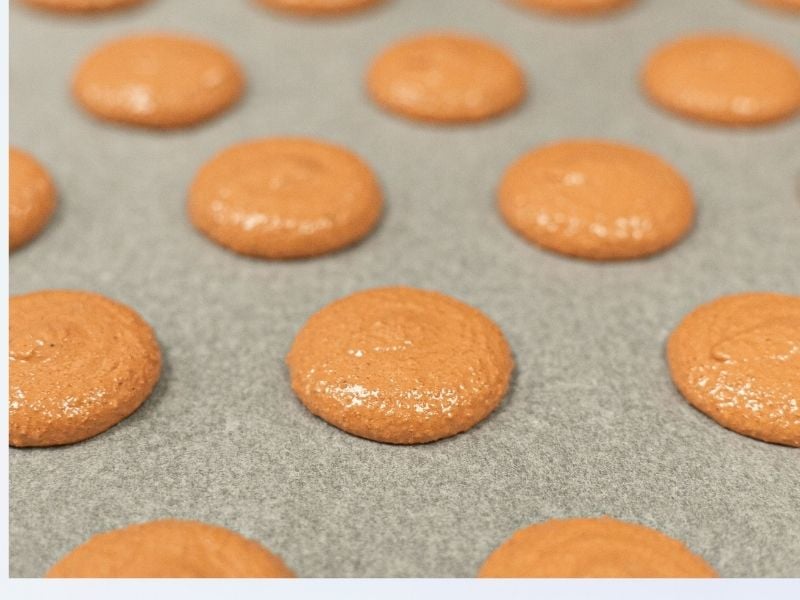
Resting allows the surface of the piped batter to develop a skin.
This skin helps create a more stable shell during baking.
Without adequate drying, steam and expanding air can disrupt the surface.
The result may be cracks.
The exact resting time varies.
Humidity plays a major role.
In a dry environment, shells may develop a skin relatively quickly.
In humid conditions, they may take much longer.
Do not rely only on a timer.
Touch the surface gently.
The batter should feel dry rather than sticky before baking.
However, avoid leaving the shells exposed for an excessively long period.
8. Your Kitchen Was Too Humid
Humidity can make macaron baking particularly challenging.
Macaron shells need to dry.
Moisture in the surrounding environment slows that process.
A humid kitchen can leave the shells tacky even after an extended resting period.
This may contribute to surface cracking.
Weather can therefore affect results even when you use the same recipe.
If your macarons work beautifully on a dry day but crack during humid weather, environmental moisture may be part of the problem.
You may need additional drying time.
Avoid placing the tray near steam from boiling water, dishwashers, or other sources of moisture.
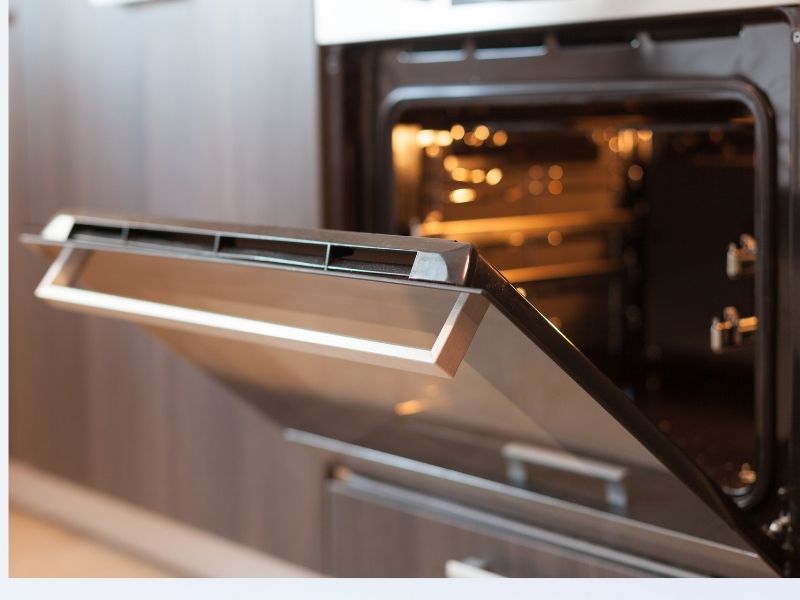
9. Your Oven Temperature Was Too High
Excessive oven heat is one of the most common reasons for cracked macarons.
The outer shell can set too quickly.
Meanwhile, the interior continues expanding.
That pressure needs somewhere to go.
If the surface has already hardened, the expanding interior may push through the top.
The result is a crack.
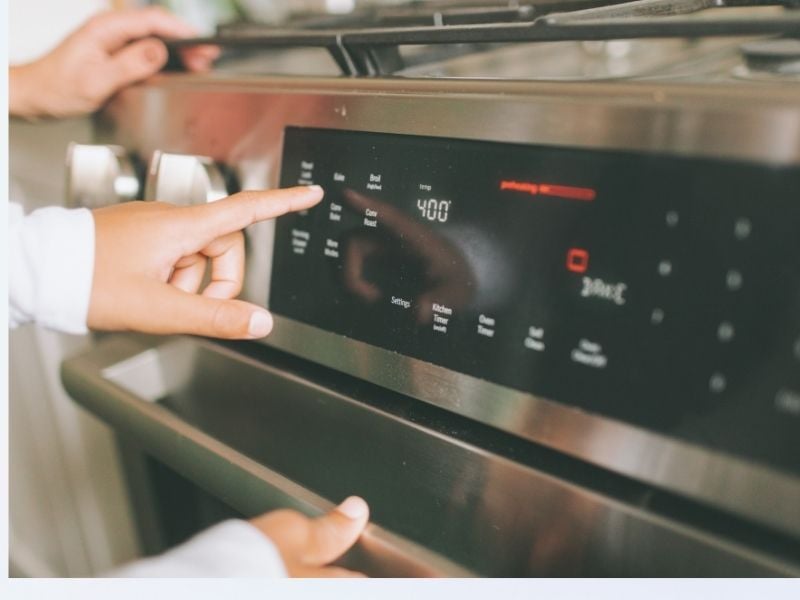
Oven temperatures are not always accurate.
The temperature displayed on the dial may differ from the actual temperature inside.
An oven thermometer can help you identify major discrepancies.
Understanding how temperature affects baking can make troubleshooting easier. Understanding Baking Temperatures for Better Results explains why temperature control matters across different baked goods.
10. Your Oven Temperature Was Too Low
Low heat can also create problems.
The shells may take too long to set.
The interior can remain unstable.
The shells may fail to develop properly before the baking process finishes.
Low temperatures can also contribute to weak feet and uneven texture.
Do not assume that increasing the temperature dramatically will fix the problem.
Make small adjustments.
If possible, use an oven thermometer.
Test one batch at a time.
Record the temperature and result.
This turns troubleshooting into a controlled experiment.
11. Your Oven Has Hot Spots
Many home ovens do not distribute heat perfectly evenly.
One area may be significantly hotter than another.
This can cause some macarons to crack while others remain intact.
You might notice that the cookies positioned near one side of the tray consistently develop more problems.
Try rotating the tray if your recipe permits it.
Do not open the oven too early.
Opening the door repeatedly can cause temperature fluctuations.
Experiment with rack placement.
The middle rack often provides a useful starting point, but every oven behaves differently.
12. Your Oven Fan Was Too Aggressive
Convection ovens circulate hot air.
This can change how quickly the macaron surface dries and sets.
A strong fan can sometimes create uneven results.
It may also affect lightweight shells more noticeably than heavier baked goods.
If your macarons consistently crack when using convection but perform better with conventional heat, your oven setting may be contributing to the problem.
Follow the temperature recommendations for your specific recipe.
Avoid changing several variables at once.
13. You Did Not Remove Surface Bubbles
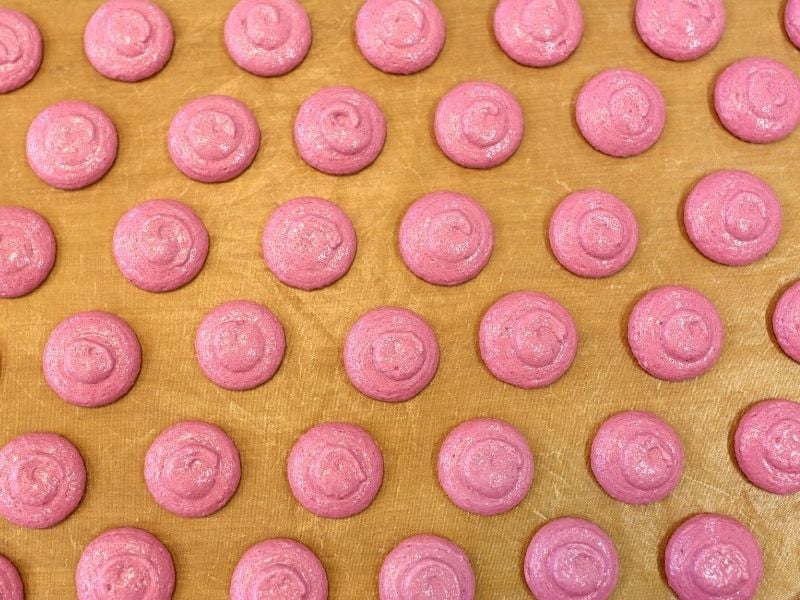
Piping creates air pockets.
Some are tiny and harmless.
Larger bubbles can become serious problems.
After piping, inspect every shell.
Look for visible bubbles near the surface.
Use a toothpick to release them.
You can gently drag the toothpick through the bubble.
Then smooth the affected area.
This small step can prevent large cracks later.
14. Your Piping Technique Created Uneven Shells
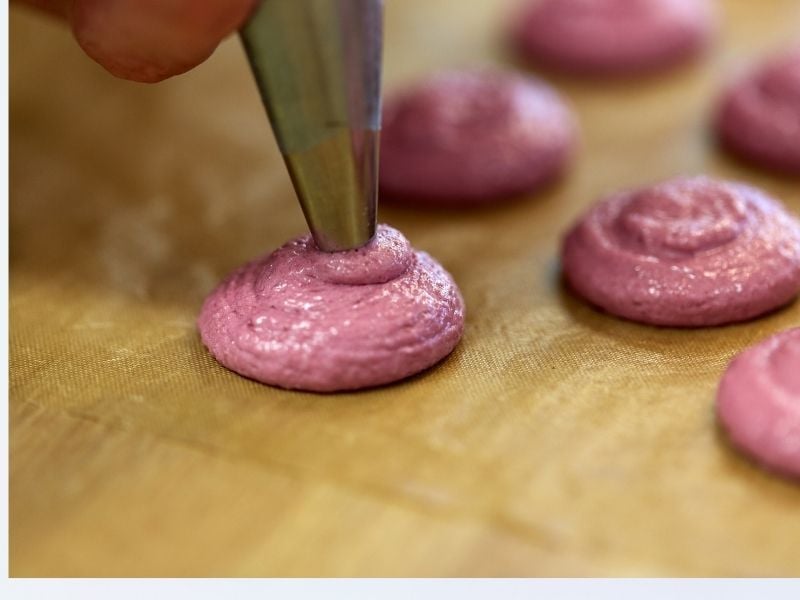
Piping seems simple, but inconsistent pressure can affect shell thickness.
If one area of the shell is significantly thicker, it may bake differently from the surrounding surface.
Hold the piping bag vertically.
Keep the tip close to the surface.
Apply steady pressure.
Stop squeezing before lifting the tip.
This creates a more uniform shell.
Practice can make a major difference.
If your piping shapes vary considerably, practice with a simple batter or icing before attempting another macaron batch.
15. Your Batter Was Too Thick
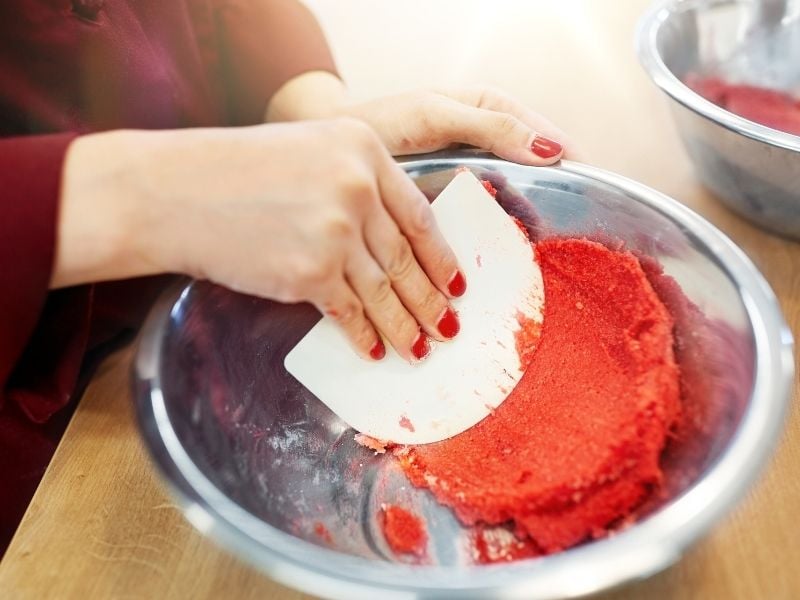
Thick macaron batter often retains too much air.
It may also produce peaked shells.
Those peaks can remain after piping.
The uneven surface can crack during baking.
Proper macaronage should create a batter that settles gradually.
If the piped shells remain pointed, your batter may need more folding.
However, do not immediately assume more mixing is the answer.
Consider the entire process.
Your meringue may also have been too stiff.
Your almond flour may have been particularly absorbent.
The recipe proportions may also differ from another recipe you have used.
16. Your Batter Was Too Thin
Very thin batter can spread rapidly.
The shells may become wide and flat.
They may lose their structural strength.
Thin batter can also create shells with an uneven surface.
If you consistently get thin, spreading macarons, review your macaronage technique.
You may be folding too aggressively.
The meringue may also have been under-structured.
Compare your batter with reliable visual references rather than relying only on mixing time.
17. You Changed Several Ingredients at Once
Macarons are not ideal for casual substitution.
Changing almond flour, sugar, egg whites, or another major ingredient can affect the final structure.
If your recipe specifies a particular ingredient, follow it carefully during troubleshooting.
Do not change three ingredients and the oven temperature at the same time.
You will not know which change affected the result.
This principle applies to many baking problems. Common Baking Mistakes and How to Fix Them Fast provides broader troubleshooting guidance that can help you approach recipe problems systematically.
18. Your Egg Whites Were Inconsistent
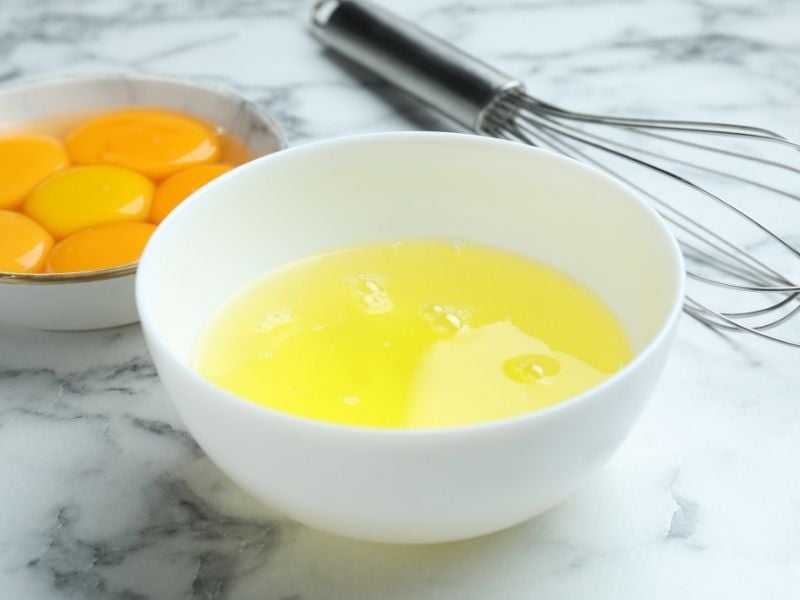
Egg whites provide the foundation for the meringue.
Their weight and condition can influence the final mixture.
Using a different amount of egg white can change the batter considerably.
This is one reason weighing ingredients is useful.
Egg whites can also behave differently depending on temperature and preparation.
Follow your recipe’s instructions carefully.
If the recipe calls for aged egg whites, understand why that instruction is included.
Avoid introducing extra liquid unless the recipe specifically requires it.
For a deeper look at their baking role, Eggs in Baking: Why They Matter and How They Affect Results explains how eggs influence structure, texture, and finished results.
19. Your Powdered Sugar Contained Too Many Lumps
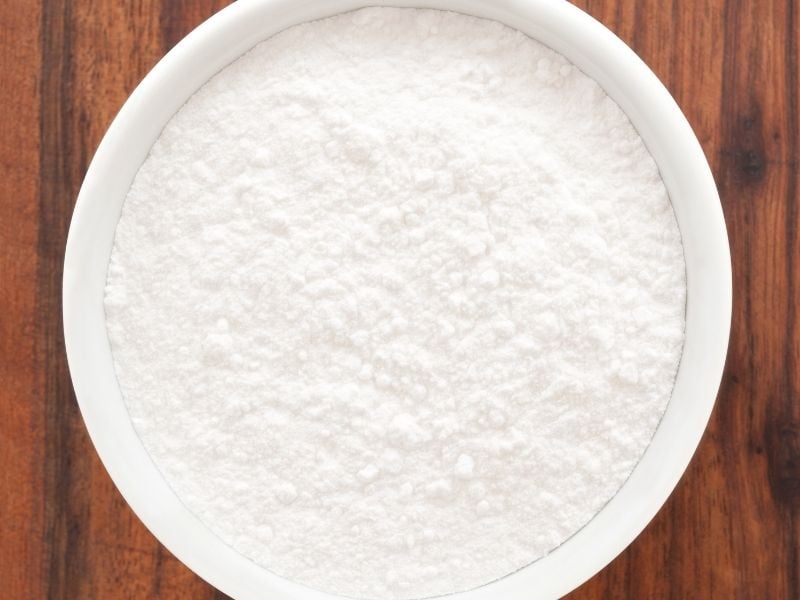
Powdered sugar should blend smoothly with the almond flour.
Clumps can create uneven areas.
Those areas may produce rough patches on the shells.
Sift the powdered sugar before combining it with the almond flour.
If the mixture remains clumpy, inspect your ingredients.
Moisture can cause powdered sugar to harden.
Fresh, properly stored ingredients generally produce more predictable results.
Ingredient storage matters more than many beginners realize.
If your pantry ingredients sit open for long periods, their condition can change.
Shelf Life of Common Baking Ingredients (Printable Guide) can help you keep track of ingredient freshness.
20. You Were Baking Without Understanding the Recipe
Macaron recipes can differ considerably.
One recipe may use Italian meringue.
Another may use French meringue.
Some recipes recommend aging egg whites.
Others do not.
Some recipes use convection settings.
Others are designed for conventional ovens.
Following one recipe’s ingredient ratios while using another recipe’s technique can create confusion.
Read the recipe from beginning to end before starting.
Measure every ingredient first.
Prepare your equipment.
Understand the expected batter consistency.
If you tend to start baking before reading the entire recipe, How to Read a Baking Recipe Correctly Before You Start can help you develop a more reliable preparation routine.
How to Troubleshoot Cracked Macarons
The easiest way to troubleshoot is to change one variable at a time.
Start by examining the cracks.
Large cracks across the entire surface may suggest excessive internal pressure.
Tiny surface cracks can point toward drying, batter, or temperature issues.
Look at the feet too.
Very tall feet combined with cracked tops can suggest excessive heat or trapped air.
Flat shells may indicate weak structure or overmixed batter.
Hollow shells can have several possible causes.
Do not automatically assume one symptom has one cause.
Macaron baking involves several connected variables.
Check Your Meringue First
Your meringue is the foundation.
Make sure it is glossy and stable.
Avoid stopping the mixer too early.
Also avoid whipping until the mixture becomes dry and clumpy.
The sugar should dissolve properly according to your chosen method.
A stable meringue gives you a better starting point for macaronage.
Check Your Macaronage
Next, examine your batter.
Was it extremely thick?
Did it flow smoothly?
Did the piped peaks disappear?
Did the batter spread immediately?
These observations can tell you whether you folded too little or too much.
Take notes after every batch.
Write down your mixing time.
Record how the batter looked.
Record the resting time.
Record the oven temperature.
This turns each batch into a learning opportunity.
Check Your Resting Time
If the shells remained sticky before baking, they may not have developed enough of a skin.
Increase the resting period during your next attempt.
However, do not assume longer is always better.
Your kitchen environment matters.
Humidity can dramatically change the time required.
Check Your Oven
If the batter looked perfect before baking but cracked in the oven, temperature becomes a strong suspect.
Use an oven thermometer.
Test different rack positions.
Avoid making dramatic temperature changes.
Small controlled adjustments are easier to evaluate.
The science behind baking can help you understand why seemingly small changes produce major differences. The Science of Baking Made Simple for Beginners explains some of the reactions that occur during baking.
What to Do With Cracked Macarons
A cracked batch does not automatically belong in the trash.
The shells may still taste delicious.
You can sandwich them with filling.
You can crumble them over ice cream.
You can use broken pieces as dessert toppings.
You can also turn imperfect shells into a layered dessert.
Macaron pieces can add color and texture to whipped cream, mousse, or pudding.
Learning to use imperfect results reduces baking waste.
It also removes some of the pressure associated with achieving perfect photographs.
How to Prevent Cracks in Your Next Batch
Start with a reliable recipe.
Weigh your ingredients.
Prepare your equipment before mixing.
Whip the meringue correctly.
Sift the dry ingredients.
Fold the batter carefully.
Remove large air bubbles.
Rest the shells appropriately.
Control the oven temperature.
Avoid changing multiple variables at once.
These steps sound simple, but consistency matters.
Macarons reward careful repetition.
You may not identify the exact cause after one failed batch.
That is normal.
Keep notes and make one adjustment at a time.
How Macarons Compare With Different Types of Pastries
Macarons are often grouped with elegant French desserts, but they behave differently from many traditional pastries.
Understanding Different Types of Pastries can help you appreciate why macaron techniques require such precision.
Laminated pastries depend heavily on layers of dough and butter.
Shortcrust relies on controlling gluten development and fat distribution.
Choux pastry depends on steam and structure.
Macarons rely heavily on whipped egg whites, almond flour, sugar, controlled air, and precise baking.
These differences explain why a technique that works beautifully for one pastry may not translate directly to macarons.
For example, aggressive mixing may be acceptable in some preparations but disastrous for a delicate macaron batter.
If you want to explore the differences between several pastry doughs, Puff Pastry vs Phyllo Dough vs Shortcrust: What’s the Difference provides useful comparisons.
Macaron Troubleshooting for Beginners
Beginners often expect macarons to behave like cupcakes or cookies.
They do not.
Small changes can produce noticeably different results.
That does not mean macarons are impossible.
It means they require observation.
Pay attention to the batter.
Pay attention to the meringue.
Pay attention to the shells before baking.
Pay attention to your oven.
The more you observe, the easier it becomes to identify patterns.
If you are struggling with confidence after several failed batches, Baking Confidence Tips for Complete Beginners can help you approach baking mistakes as part of the learning process.
How to Build a Reliable Macaron Routine
A consistent routine can reduce unnecessary variables.
Start by preparing all ingredients.
Clean and dry your equipment.
Measure everything before beginning.
Sift the dry ingredients.
Prepare the meringue.
Fold the batter carefully.
Pipe identical circles.
Remove visible bubbles.
Rest the shells.
Preheat the oven fully.
Bake according to your tested temperature.
Allow the shells to cool before removing them.
Fill the macarons.
Let them mature according to your recipe.
This sequence keeps the process organized.
A well-organized baking station can also make precision work easier. Aesthetic Baking Setup Ideas For Beginners offers inspiration for creating a practical and attractive workspace.
Final Thoughts
Cracked macarons can be frustrating, but they are rarely a sign that you should give up.
The cracks usually point toward a specific issue.
Your meringue may have been unstable.
Your batter may have been overmixed or undermixed.
Air bubbles may have remained trapped.
The shells may not have rested long enough.
Humidity may have slowed drying.
Your oven may have been too hot or too cool.
The key is to troubleshoot systematically.
Do not change everything at once.
Make one adjustment.
Bake another batch.
Record what happened.
Then make another small adjustment if necessary.
Over time, you will begin to recognize how your particular ingredients, kitchen environment, equipment, and oven affect macarons.
That knowledge is far more valuable than simply following a recipe without understanding it.
Once you understand how structure, temperature, moisture, air, and ingredients interact, delicate baking becomes less mysterious.
Your first batch may crack.
Your second batch may spread.
Your third batch may look much better.
That progression is completely normal.
The goal is not to produce flawless macarons immediately.
The goal is to understand what happened, learn from it, and gradually develop a process that gives you smooth, elegant shells with greater consistency.