How to Price Your Baked Goods For Profit (Beginner Guide)
Disclosure: Some of the links in this post are affiliate links. This means if you click on the link and purchase an item, I will receive an affiliate commission at no extra cost to you.
One of the most common struggles for anyone starting to sell their baking is figuring out how to price your baked goods. You know what things cost at the supermarket. You know what the bakery down the road charges. But when it comes to putting a number on your own homemade bakes, most beginners either guess, undercharge dramatically, or panic and price so low they’re essentially working for free.
Learning how to price your baked goods for profit is not complicated once you understand the framework. It’s a straightforward calculation that accounts for your costs, your time, your overheads, and the market you’re selling into. Get it right and you have a pricing structure that’s sustainable, profitable, and fair to your customers and, just as importantly, to yourself.
This beginner guide to pricing baked goods walks through every component of a solid baking business pricing formula, shows you how to price homemade baked goods with real examples, and covers the common pricing mistakes that keep home bakers from making money.
Why Getting Baked Goods Pricing Right Matters
Before getting into the how, it’s worth understanding why so many home bakers underprice and what it actually costs them.
Underpricing is one of the most common and damaging mistakes in a home baking business. It usually comes from a few places: not wanting to seem expensive, not fully accounting for all costs, comparing prices to supermarket baked goods (a completely different business model), or simply not knowing how to calculate pricing for baked goods correctly.
The problem is that underpriced baked goods don’t just mean lower profit, they often mean no profit at all, or worse, a loss. When you factor in every ingredient, every overhead, every hour of your time, and the cost of running a baking business, selling a dozen cookies for £5 or $5 is almost certainly losing you money, even if it doesn’t feel like it.
Bookmark this: How to store baked goods to make them fresh
Pricing your baked goods correctly isn’t greedy, it’s necessary. A bakery business that doesn’t make profit isn’t a business, it’s an expensive hobby. And you deserve to be paid properly for your skill, time, and effort.
How to Price Your Baked Goods For Profit
Step 1: Calculate Your Ingredient Costs
This is the foundation of how to price baked goods. You need to know exactly how much the ingredients in each recipe cost you to produce.
1. The Cost Per Recipe Method
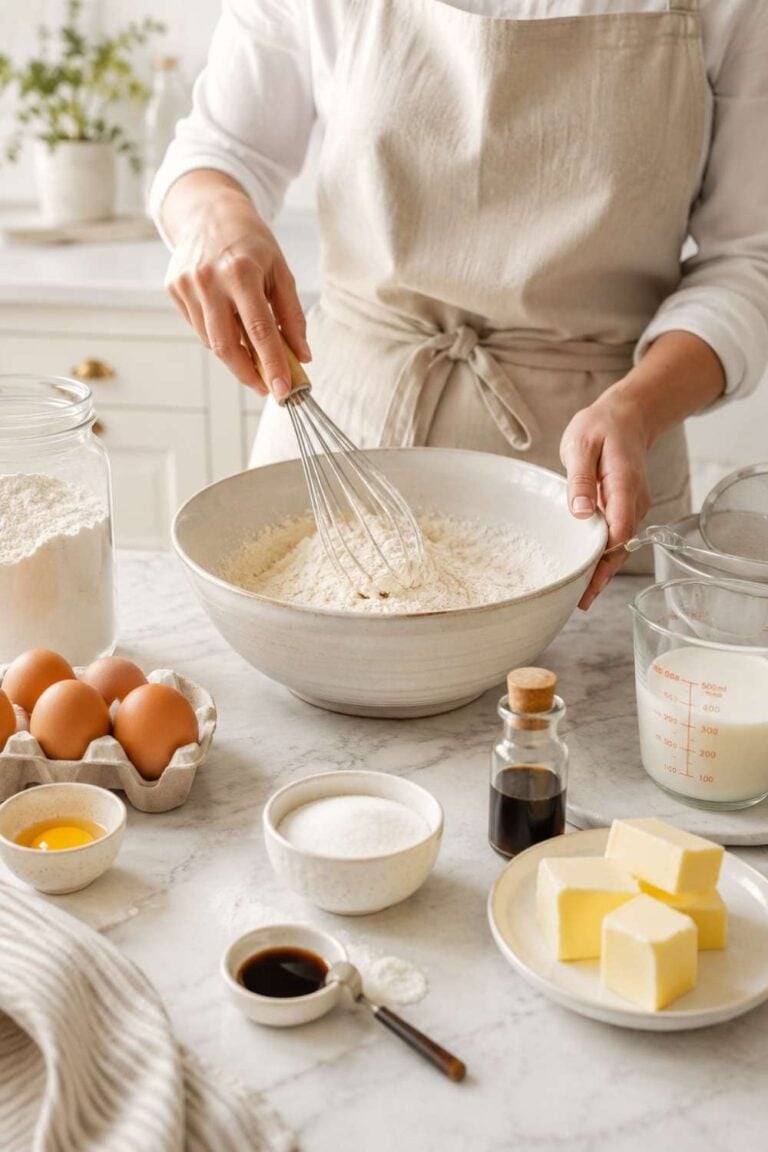
Start with a specific recipe you want to price. Write down every ingredient in the recipe with the quantity used. Then work out the cost of that specific quantity based on what you paid for the ingredient.
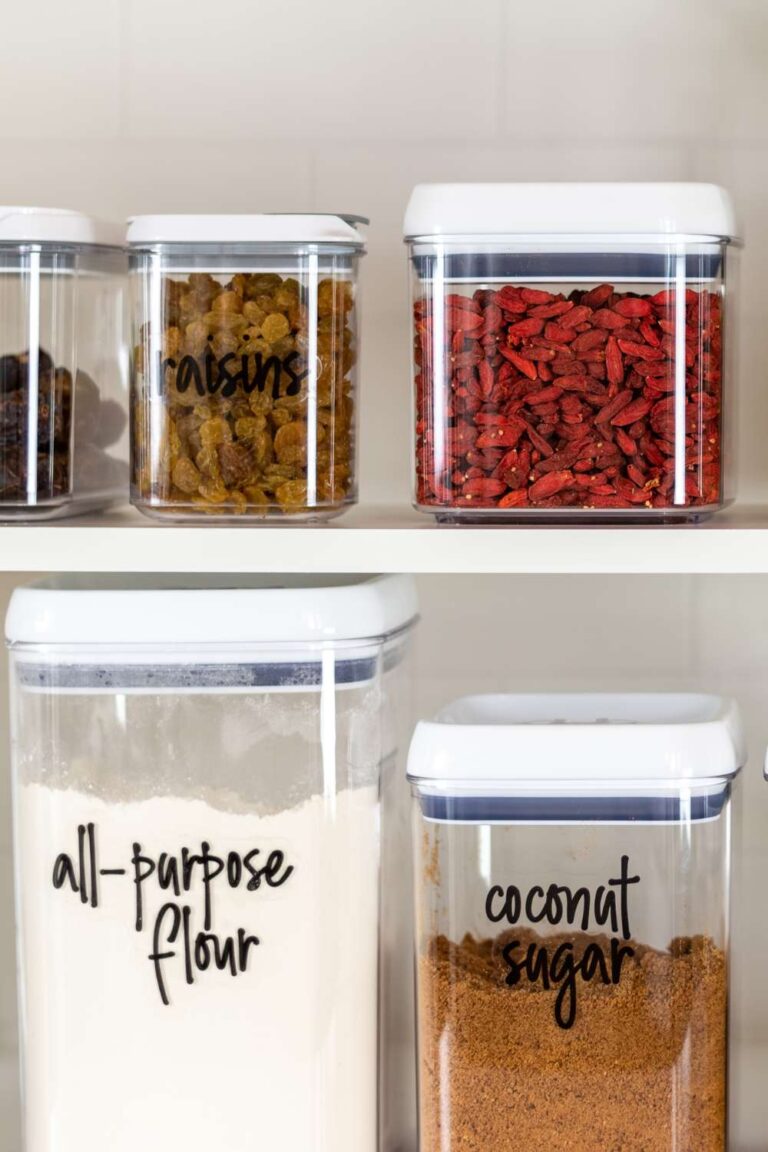
For example, if a bag of all-purpose flour costs $3.00 and weighs 2kg, the flour costs $0.15 per 100g. If your recipe uses 250g of flour, that’s $0.375 just for the flour in that recipe.
Do this for every ingredient — flour, sugar, butter, eggs, chocolate, flavourings, decorations, packaging. Add them all up and you have your total ingredient cost per batch.
Example for a dozen chocolate chip cookies:
| Ingredient | Amount Used | Cost |
|---|---|---|
| All-purpose flour (250g) | 250g | $0.38 |
| Butter (150g) | 150g | $0.75 |
| Sugar (150g) | 150g | $0.30 |
| Brown sugar (100g) | 100g | $0.22 |
| Eggs (1 large) | 1 egg | $0.25 |
| Vanilla extract (1 tsp) | 1 tsp | $0.10 |
| Baking soda (½ tsp) | ½ tsp | $0.02 |
| Salt (¼ tsp) | ¼ tsp | $0.01 |
| Chocolate chips (200g) | 200g | $1.20 |
| Total ingredient cost | $3.23 |
That’s $3.23 in ingredients for 12 cookies — about $0.27 per cookie in raw ingredients alone.
2. Don’t Forget Packaging
Packaging is an ingredient cost that many beginners forget entirely when calculating how to price homemade baked goods. Boxes, bags, ribbon, tissue paper, stickers, labels — all of these have a cost that needs to be factored in.
If a box costs $0.80 and holds 12 cookies, that’s $0.80 added to the batch cost. If you use tissue paper and a ribbon that together cost $0.30, add that too. Packaging should be included in every pricing calculation.
Step 2: Calculate Your Overhead Costs
Overhead costs are the expenses of running your baking operation that aren’t tied to a specific batch of ingredients. Many beginners completely ignore overhead costs when pricing baked goods, which is one of the main reasons home bakers fail to make profit.
1. What Counts as Overhead in a Baking Business
Electricity and gas. Every time you run the oven, use the mixer, or run the dishwasher, it costs money. Estimate your monthly energy bill increase since you started baking and divide it by the number of batches you produce per month. Even a modest estimate of $0.20–$0.50 per batch adds up significantly across a year.
Equipment and tools. Your stand mixer, your baking pans, your piping bags — these all cost money and wear out over time. This is called depreciation. A stand mixer that costs $200 and lasts 5 years costs approximately $3.33 per month to “use.” Include a small equipment depreciation figure in your overhead costs.
Cleaning supplies. Dish soap, washing-up liquid, cleaning cloths — small costs that add up when you’re washing equipment for multiple baking sessions per week.
Labelling and business supplies. Printer ink, food labels, business cards, packaging tape.
Any licences or certifications. If you’ve taken food hygiene courses or obtained a cottage food licence, those costs belong in your overhead.
2. How to Calculate Overhead Per Batch
Add up your estimated monthly overhead costs and divide by how many batches you produce in a typical month.
If your monthly overheads total $50 and you produce 20 batches per month, your overhead per batch is $2.50. Add this to your ingredient cost for every batch you price.
Step 3: Value Your Time
This is where pricing baked goods for profit gets personal — and where most beginners significantly undersell themselves.
Your time has value. When you spend 3 hours baking and decorating a cake, those 3 hours are worth real money. If you don’t charge for your time, you’re not running a business — you’re doing unpaid labour.
1. Setting Your Hourly Rate
Decide on an hourly rate for your time. This should reflect your skill level and experience, your local market, and the minimum you need to earn for your work to be worthwhile. A reasonable starting rate for a beginner home baker might be $12–$15 per hour. As you develop your skills and reputation, this rate should increase.
For each recipe you price, track exactly how long the full process takes — shopping, prep, baking, decorating, cooling, packaging, and any cleanup time. Multiply that time by your hourly rate.
If a batch of 12 decorated sugar cookies takes 2 hours from start to finish and your rate is $15/hour, your time cost is $30 for that batch — $2.50 per cookie in labour alone.
See more ideas here: How to Start a Baking Business From Scratch
Many beginners are shocked when they calculate how to price homemade baked goods and see what their time is actually worth. This is the number that most dramatically changes their pricing — and for good reason.
Step 4: Add Your Profit Margin
Profit margin is the amount above your costs that you keep as actual profit. This is different from your labour cost — profit margin is the return on your business, the money that covers your business growth, your savings, and makes the whole operation financially worthwhile.
1. The Standard Markup Formula
A common formula used in the food industry for pricing baked goods is:
Selling Price = (Ingredient Cost + Overhead + Labour) × Markup Multiplier
A markup multiplier of 2.5–3x is a common starting point in home baking. This means if your total costs (ingredients + overhead + labour) for a batch come to $10, you’d charge $25–$30.
Some high-end or specialist baking commands an even higher multiplier — decorated cakes, wedding cakes, and specialty items that require significant skill can command 4–5x cost or more.
2. Applying the Formula — Worked Example
Going back to the chocolate chip cookies:
| Cost Component | Amount |
|---|---|
| Ingredient cost (12 cookies) | $3.23 |
| Packaging | $0.80 |
| Overhead (per batch) | $2.50 |
| Labour (1.5 hours at $14/hr) | $21.00 |
| Total cost | $27.53 |
Applying a 2.5x multiplier: $27.53 × 2.5 = $68.83 per batch, or approximately $5.74 per cookie.
A dozen cookies at around $6 each, or a box of 12 for $65–$70, may feel high if you’re used to supermarket prices. But supermarket cookies are mass-produced at industrial scale with completely different cost structures. Your cookies are handmade, fresh, and made with quality ingredients — they are a different product entirely.
Step 5: Research Your Market
Once you’ve calculated your cost-based price, check it against what similar baked goods sell for in your area and online.
Search for local cottage bakeries, home bakers on Instagram, and Etsy sellers offering similar products. Look at what custom cake decorators in your area charge. This gives you a market reference point.
If your calculated price is in line with or below what others are charging, you’re good — your pricing is competitive and sustainable. If your price comes out significantly higher than the market, review your costs to see whether there’s waste you can reduce, or consider whether your recipe needs to be scaled up to produce more units per batch.
If your calculated price comes out significantly lower than the market, resist the temptation to drop your price to match. Your price is based on your actual costs — pricing below your costs to match a race to the bottom is not a pricing strategy, it’s a path to burnout and loss.
Common Pricing Mistakes to Avoid
Only counting ingredient costs. Ingredients are just one part of the cost of baked goods. Forgetting overhead and labour is the most common reason home bakers fail to make real profit.
Not tracking time accurately. People consistently underestimate how long baking actually takes. Start timing yourself for every stage of a recipe and use real numbers.
Pricing against supermarkets. A supermarket produces cookies and bread at industrial scale. You cannot compete on price with a factory — and you shouldn’t try. You’re offering something completely different: fresh, handmade, quality goods.
Being afraid to charge what your baked goods are worth. Undercharging feels safe but it’s self-defeating. Customers who value quality homemade baked goods will pay fair prices. The ones who won’t aren’t your target customers.
Not revising prices when costs go up. Ingredient costs change. When butter prices increase, your cost per batch increases — and your prices need to reflect that. Review your pricing every few months and adjust as needed.
Offering too many products too cheaply. A focused menu of well-priced products is more profitable than a wide menu of underpriced ones. Start with a small number of signature items you can price properly and make well.
Special Pricing Considerations
Custom and Decorated Cakes
Custom cakes deserve their own pricing conversation because the variables are so significant. A custom decorated cake involves not just baking time but design consultation time, sketching, sourcing specialty decorations, and intricate decoration work that can take many hours.
For custom cakes, calculate your base costs as above, then add a detailed estimate of your decoration time at your hourly rate. Many custom cake bakers charge a design fee on top of their base price — this covers the time spent communicating with the client, sketching the design, and sourcing specific elements.
Custom cake pricing varies significantly by location and skill level, but as a general guide, a two-tier decorated cake from a quality home baker typically starts at $100–$150 and goes up significantly from there based on complexity.
Minimum Orders
Setting a minimum order value for custom work protects your time. If you spend 20 minutes communicating with a customer, preparing a quote, and organising delivery for an order that’s worth $15, you’ve lost money on that transaction. A minimum order value of $30–$50 for custom or delivery orders is reasonable and widely used by home bakers.
Your Quick Reference for How to Price Your Baked Goods For Profit
Step 1: Calculate total ingredient cost per batch (include every ingredient and packaging).
Step 2: Add your overhead cost per batch (energy, equipment, supplies).
Step 3: Add your labour cost (time in hours × your hourly rate).
Step 4: Add all three together to get your total cost per batch.
Step 5: Multiply total cost by your markup (2.5–3x for most home baking).
Step 6: Divide by the number of units in the batch to get price per unit.
Step 7: Check against your local market and adjust if needed.
This formula for pricing baked goods for profit is straightforward, replicable, and works for everything from a batch of cookies to a tiered wedding cake. Use it every time you add a new product to your menu.
Final Thoughts
Pricing baked goods is one of the most empowering skills you can develop as a home baker who wants to sell. Once you have a clear formula and you understand every component of your costs, pricing decisions become logical rather than emotional. You stop guessing, stop undercharging out of anxiety, and start running a baking operation that’s actually worth your time.
Value your ingredients. Value your overhead. And above all — value your time. That’s how to price baked goods for profit.