How I Turned Baking Into a Side Hustle (Even as a Beginner)
Disclosure: Some of the links in this post are affiliate links. This means if you click on the link and purchase an item, I will receive an affiliate commission at no extra cost to you.
A couple of years ago, I was baking purely for fun. Weekends at the counter, flour on my clothes, trying out new recipes with no particular goal other than eating the results and occasionally impressing friends. I wasn’t a professional. I hadn’t been to pastry school. I was just someone who liked baking and had gotten reasonably good at it through practice.
Then someone asked if I could make a birthday cake for them — and offered to pay for it.
That was the moment the idea of turning baking into a side hustle first crossed my mind as something real rather than a vague fantasy. If one person was willing to pay, maybe others were too. And if I could cover my ingredient costs, make a little extra income, and keep doing something I genuinely loved — that felt like a pretty good deal.
Turning baking into a side hustle as a beginner is not only possible, it’s one of the more accessible side income ideas out there. You don’t need a commercial kitchen, a business degree, or years of professional training. You need solid baking skills, a basic understanding of costs and pricing, a few legal foundations in place, and the willingness to put yourself out there.
This post walks through exactly how to make money baking from home as a beginner — what I did, what I wish I’d known sooner, what mistakes I made, and what actually worked. Whether you’re thinking about starting a baking side hustle or you’ve already started and want to grow it, there’s something here for you.
Starting Small: Why “Beginner” Is Not a Problem
One of the biggest mental barriers for beginner bakers considering a baking side hustle is the belief that they’re not good enough yet. That they need to reach some undefined level of professional skill before they can charge for their baking.
That’s not how it works.
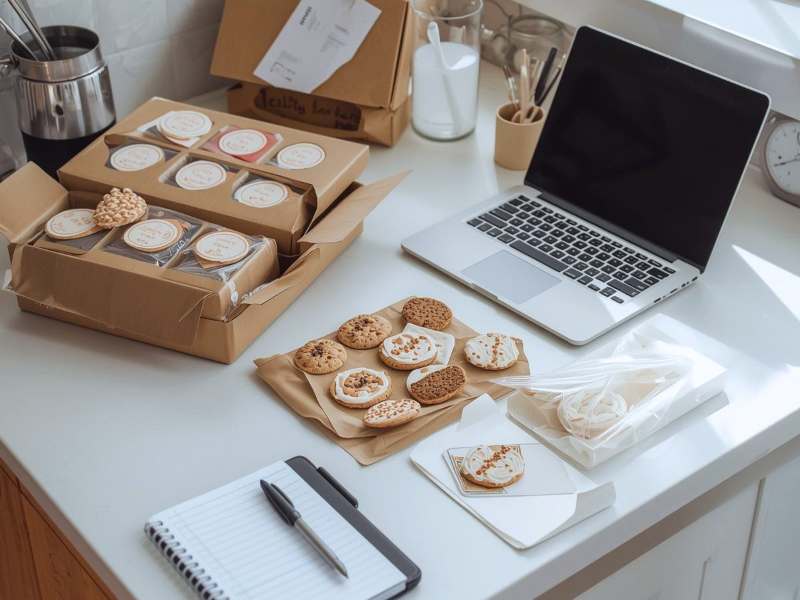
Think about what “better than a supermarket” actually means to a customer. It means they can taste real butter. It means the cake was made that morning, not three weeks ago in a factory. It means someone chose quality ingredients and paid attention to the process. It means there’s a real person behind it who genuinely cares how it turns out. That combination — freshness, quality, and care — is something no supermarket can replicate at scale, and it’s exactly what your customers are paying for when they buy from a home baker.
The key word is consistently. A baking side hustle isn’t about making something great once. It’s about making it great every single time, to order, within the agreed timeline. That consistency is what builds a reputation, generates repeat customers, and grows your home baking into side hustle over time. One excellent order gets you a customer. Ten excellent orders in a row gets you a referral network. That’s how a baking side hustle becomes something real.
Start with what you bake best. Don’t try to offer everything. Pick two or three things you make reliably well and start there.
How I Turned Baking Into a Side Hustle
Step 1: Identify What You’re Going to Sell
The first practical step in turning baking into a side hustle is deciding what you’re going to sell. And the best answer to that question is not “what’s most popular” or “what seems most profitable” — it’s “what do I make best and what do people keep asking me for?”
1. Start With What You Already Make
Think about what you bake most often. What do people request from you? What do friends and family specifically compliment? What do you feel genuinely confident making repeatedly without things going wrong?
Start with this: The Ultimate Beginners Guide to Baking
That’s your starting point for a baking side hustle. It might be brownies. It might be a particular type of cookie. It might be celebration cakes or banana bread or a specific recipe that’s become your signature. Start there.
2. Test Before You Sell
Before you take paid orders, test your recipes thoroughly. Make the same thing multiple times. Invite people to taste it and give honest feedback — not just friends who will be polite, but people who will tell you if something isn’t right. Make sure you can produce it consistently, efficiently, and to a standard you’re proud of.
Testing also helps you understand exactly how long each product takes to make — which is essential for calculating your labour cost and knowing how to price your baking side hustle products correctly.
3. Consider Shelf Life and Practicality
Some baked goods are better for a home baking side hustle than others purely from a logistics standpoint. Cookies, brownies, loaf cakes, and cupcakes travel well, have a reasonable shelf life, and are easy to package. Cream-filled pastries, fresh fruit tarts, and elaborate showpiece cakes require more care in transport, have shorter shelf lives, and have more variables that can go wrong.
For a beginner baking side hustle, leaning toward products that are robust, have a good shelf life, and are practical to package and deliver makes the operation significantly easier to manage.
Step 2: Get the Legal Side Right
Making money baking from home legally requires understanding the food safety rules in your area. This is not the exciting part of starting a baking side hustle, but it’s one of the most important — and skipping it creates real risk.
1. Register as a Food Business
In most countries, anyone selling food from home is required to register their home as a food business with their local authority. In the UK, this is done through your local council and is free. In the US, cottage food laws vary by state and determine what you can sell, where you can sell it, and sometimes how much you can earn from it annually.
Research the specific rules for your country and region before you take your first paid order for your baking side hustle. Operating without the required registration isn’t just a legal risk — it also means you’re not covered if something goes wrong.
2. Get a Food Hygiene Certificate
A basic food hygiene certification (Level 2 Food Safety is the standard in the UK; ServSafe is widely recognised in the US) is inexpensive, can be completed online in a few hours, and demonstrates to customers and authorities that you understand basic food safety principles. It’s a minimal investment that adds real credibility to your home baking side hustle.
3. Allergen Awareness
If you’re selling baked goods, you’re legally required in most countries to clearly communicate allergen information to your customers. The 14 major allergens — including gluten, dairy, eggs, tree nuts, and peanuts — must be disclosed either on a label or verbally at the point of sale.
This is non-negotiable. Allergen errors can cause serious harm to customers and serious legal and reputational damage to your baking side hustle. Take allergen management seriously from the very beginning.
Step 3: Set Up Your Pricing So You Actually Make Money
Underpricing is the single most common reason home baking side hustles fail to generate meaningful income. Most beginner bakers either guess at a price, base it on what supermarket products cost (wrong comparison entirely), or price so low that after ingredients and time, they’re effectively working for free.
Making money baking from home requires a proper pricing formula. Every product you sell must cover four things: ingredient costs, overhead costs (energy, packaging, equipment wear), your labour at a fair hourly rate, and a profit margin on top.
If your total costs for a batch of 12 brownies come to $20 (ingredients + packaging + overhead + your time at a fair hourly rate), charging $22 for the batch doesn’t make you money — it barely covers costs. Applying a 2.5–3x markup on your total costs gives you a selling price that’s genuinely profitable.
The maths can feel uncomfortable when you first work it out. A box of 12 homemade brownies priced to actually make money might cost $45–$55. That feels high compared to a supermarket, but your brownies are not a supermarket product. They are fresh, handmade, made with quality ingredients, and made by someone with real skill. Price them accordingly.
For a full breakdown of how to price your baked goods for profit, including worked examples and a formula you can apply to every product, see our dedicated pricing guide.
Step 4: Start Getting Orders
Getting your first paid orders is the part that feels most daunting for most beginner home bakers — and it’s also the part that’s simpler than it seems once you start.
1. Start With Your Existing Network
Your first customers for a baking side hustle are almost always people who already know you. Friends, family, colleagues, neighbours, your local community. Tell people you’ve started taking orders. Post your bakes on your personal social media. Bring samples to work or to gatherings. The first few orders almost always come through personal connections, and those first customers are the foundation of your reputation.
Don’t be embarrassed about asking people to support your baking side hustle. Most people are genuinely happy to buy from someone they know, especially if the product is good.
2. Set Up a Simple Instagram or Facebook Page
Social media is where a home baking side hustle gets discovered. A simple, consistent Instagram or Facebook page showcasing your bakes — good natural light photos, honest descriptions, your location, and how to order — is all you need to start attracting customers beyond your personal network.
Post regularly. Show the process as well as the finished product. Share customer photos (with permission). Respond to every comment and message promptly. Your social media is your shop window, and keeping it active and professional is one of the most effective marketing investments you can make in your baking side hustle.
See this: Baking Flat Lay Ideas For Instagram & Pinterest
3. Join Local Community Groups
Facebook community groups, neighbourhood apps, and local online forums are excellent places to introduce your home baking side hustle to a local audience. Many home bakers get a significant portion of their orders through local Facebook groups — particularly around seasonal events like Christmas, Easter, and back-to-school season.
Post with clear photos, clear pricing, and clear information on how to order. Be transparent about your lead times and what you offer. Don’t just post once and disappear — show up regularly, engage with other members, and become a familiar presence in the group. When someone posts asking for cake recommendations in your area, you want to be the name that other members tag without hesitation.
Beyond Facebook, look into neighbourhood apps like Nextdoor, local WhatsApp community groups, and area-specific online forums. These hyper-local platforms often have less competition than broader social media and connect you directly with people in your immediate area who prefer buying locally. A simple, friendly introduction post — who you are, what you bake, a good photo, and how to reach you — is all it takes to get started. Pin it if the group allows it, and update it seasonally with relevant products. A Christmas post in a local group in early November, for example, can generate a meaningful wave of festive orders from people who were already planning to buy and just needed to find the right baker.
4. Consider Local Markets
Farmers’ markets, craft fairs, and food markets are some of the best places to generate a significant volume of orders and new customer relationships in a single day. Research local markets in your area, check their application requirements (some require food business registration and public liability insurance), and consider booking a stall for a market near a busy season.
Markets also give you immediate, direct feedback on which products people are most drawn to — information that’s genuinely valuable for refining your baking side hustle menu. Watch what people pick up first, what they come back to ask about, and what they walk past without a second glance. That real-world data is more useful than any amount of guessing about what your market wants. Collect contact details where you can — a simple sign-up sheet for a newsletter or order updates turns one-day market customers into long-term regulars who order from you between markets too.
Step 5: Manage Orders Without Burning Out
One of the less-discussed challenges of a baking side hustle is the risk of letting it grow faster than you can comfortably manage — taking on too many orders, underestimating how long things take, and burning out on something you used to love.
1. Set Realistic Order Limits
Be honest with yourself about how much you can produce in a given week alongside your other commitments. Set a maximum number of orders or batches per week and stick to it. It’s better to have a waiting list than to overcommit and underdeliver.
2. Use an Order Form
A simple order form — a Google Form works perfectly — captures all the information you need for every order: customer name, contact details, what they want, quantity, allergen requirements, collection or delivery preference, and date needed. Having this documented prevents miscommunication and gives you a clear record of every transaction.
3. Take Deposits
For any custom order particularly cakes take a deposit of 30–50% at booking. This protects you from last-minute cancellations after you’ve already purchased ingredients. Communicate your cancellation policy clearly upfront.
4. Build in Enough Baking Time
When you’re calculating lead times, be generous. Account for shopping time, prep time, actual baking and cooling time, decorating time, and packaging time — not just the baking itself. Rushing an order leads to mistakes, and mistakes in a baking side hustle damage the reputation you’re working to build.
What I Wish I’d Known When I Started
Price your work properly from day one. Starting low to attract customers and planning to raise prices later is much harder than it sounds. Customers anchor to your original prices and push back on increases. Start at the right price.
Not everyone is your customer — and that’s fine. Some people will think your prices are too high. They are not your target customer. The customers worth having will understand and appreciate the value of fresh, handmade baked goods and will pay fairly for them.
Consistency matters more than perfection. A baking side hustle isn’t about making the most extraordinary thing anyone has ever eaten. It’s about making something reliably good, every single time. Focus on consistency over showmanship.
Keep records from the start. Track every penny you earn and spend from your first order. It takes five minutes per transaction and saves enormous headaches at tax time.
Your baking side hustle should be enjoyable. If it stops being enjoyable and starts feeling like a stressful obligation, something needs to change — either your order volume, your pricing, your product range, or your expectations. A side hustle that makes you miserable isn’t a success, regardless of what it earns.
Final Thoughts
Turning baking into a side hustle as a beginner is absolutely achievable. Thousands of home bakers have done it — starting with exactly the skills and equipment you have right now, from the same kind of kitchen, with the same uncertainties.
The foundation is simple: bake what you do well, price it properly, sort out the legal basics, tell people you exist, and deliver quality consistently. Do those things and the baking side hustle builds itself, one happy customer at a time.
Start with your next bake.