How to Bake Without an Oven (Realistic Methods That Work)
Disclosure: Some of the links in this post are affiliate links. This means if you click on the link and purchase an item, I will receive an affiliate commission at no extra cost to you.
Not everyone has access to a working oven. Maybe yours has broken and the repair is taking longer than expected. You live in a small flat where the oven barely functions, or doesn’t exist at all. You’re in student accommodation with shared kitchen access, or you’re travelling somewhere with only basic cooking equipment. Maybe the power is out, or summer heat makes turning on the oven completely unappealing.
Whatever the reason, the question is the same: can you actually bake without an oven? And the honest answer is yes, more than you might think.
Dive into this: The Ultimate Beginners Guide to Baking
This isn’t a post about hacks that technically work but produce sad, disappointing results. These are realistic, genuinely useful methods for baking without an oven with honest notes on what each method does well, what it doesn’t do well, and exactly how to use it.
What Does it Means to “Bake Without an Oven”
Before diving in, it’s worth being straight about one thing: some baked goods genuinely need an oven. A tall, layered celebration cake with a perfectly even crumb, you need an oven for that. Croissants, baguettes, and yeasted puff pastry all need an oven.
But a huge range of baked goods like cakes, bread, cookies, brownies, muffins, and more — can be made successfully using alternative methods. They may look slightly different from oven-baked versions, the crust may be different, the browning may be less even, but the taste and texture can be genuinely excellent.
What baking actually requires, at its core, is sustained heat applied consistently over time — enough to cook the batter or dough through, set the structure, and develop flavour. A conventional oven does this by surrounding food with dry, circulating hot air. But it isn’t the only way to apply consistent heat. A covered pot on a low flame does it. A pressure cooker does it. A slow cooker does it. Even a microwave, through a completely different mechanism, achieves a version of it.
The texture and finish will vary depending on the method. Stovetop baking won’t give you the same golden crust as an oven. Microwave baking won’t give you any browning at all. But these aren’t failures — they’re just different results, and for many recipes, they’re perfectly good ones. Some methods, like the pressure cooker for cheesecake or the slow cooker for brownies, actually produce results that give the oven a run for its money.
The methods in this post work. People have been baking without conventional ovens for centuries across many cultures around the world, and they’ve produced extraordinary food doing it. Let’s look at how.
How to Bake Without an Oven
Method 1: Stovetop Baking (Pan Baking)
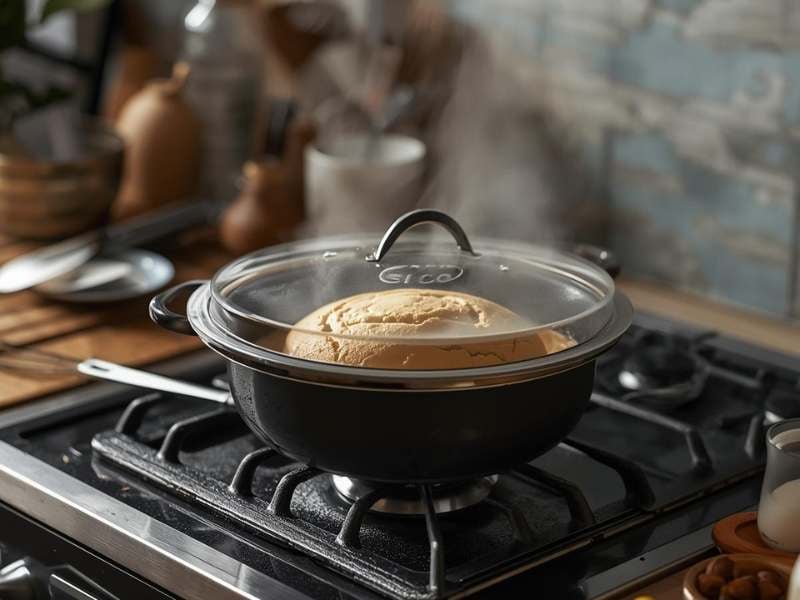
Stovetop baking is exactly what it sounds like — baking on a hob/stovetop using a covered pot or pan as a makeshift oven. It’s one of the oldest cooking methods in the world, widely used across West Africa, South Asia, and many other regions where oven access is limited.
The principle is simple: a heavy pot with a tight-fitting lid traps heat and steam, creating an environment hot enough to bake bread, cakes, and more. The key is low, even heat and a lid that stays on.
What You Need
A heavy-bottomed pot or pan cast iron is ideal because it distributes heat evenly, but a heavy stainless steel or aluminium pot works too. The pot should be large enough to hold your baking tin with some space around it.
Save this guide: Essential Baking Tools Every Home Baker Needs (with budget options)
A tight-fitting lid. The lid traps heat and creates the “oven” effect. Some people place a layer of foil under the lid for extra insulation.
A small rack, trivet, or a few bottle caps placed at the bottom of the pot. These lift your baking tin off the direct heat, preventing the bottom from burning while the rest of the bake cooks.
How to Do It
Place your rack or trivet at the bottom of the dry, empty pot. Cover the pot with the lid and heat it on a low-medium flame for 5–8 minutes to preheat — this is equivalent to preheating your oven and is important for even baking.
Prepare your batter or dough in a greased tin or heat-safe baking dish that fits inside the pot. Carefully lower the tin onto the rack inside the hot pot. Cover immediately with the lid. Reduce the heat to low.
Bake on low heat, keeping the lid on as much as possible. Cooking times are generally longer than oven baking — expect 1.5 to 2 times the usual baking time. Check by inserting a skewer into the centre when the bake smells done. If it comes out clean, it’s ready.
What Works Well
Banana bread and other quick breads are excellent on the stovetop. Basic sponge cakes work well. Cornbread. Simple muffin batter baked in a covered pan. Flatbreads and some yeasted breads. Chocolate lava-style puddings. Rice cakes and semolina cakes.
What to Watch Out For
The bottom of the bake cooks faster than the top because it’s closer to the heat source. Keep the heat genuinely low — low and slow is the rule for stovetop baking. If you smell burning before the bake is done, reduce the heat further or add a layer of salt to the bottom of the pot (the salt acts as a heat buffer).
Method 2: Microwave Baking
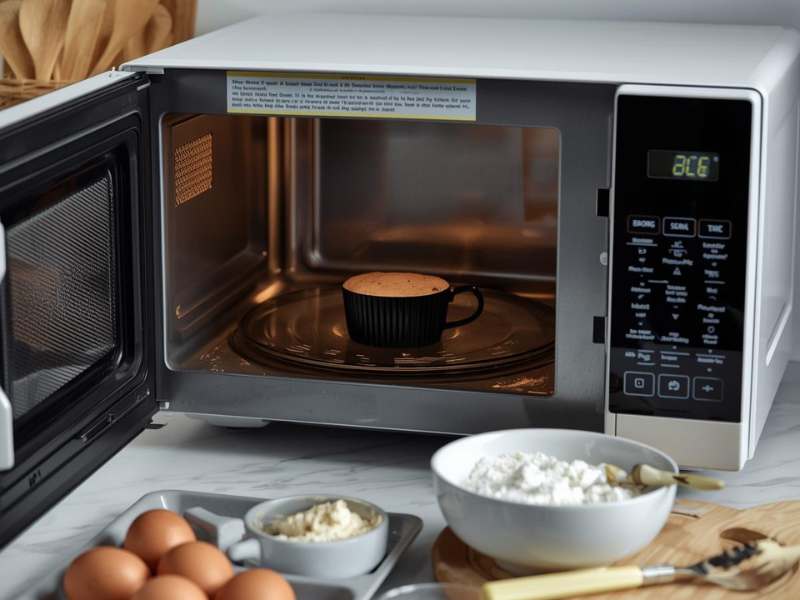
A microwave cooks differently from an oven: it heats food from the inside out using microwave radiation rather than surrounding it with hot air. This means texture is different — no golden crust, no browning, softer exterior. But for some baked goods, the results are genuinely good.
What Works in a Microwave
Mug cakes are the obvious starting point. A mug cake is a single-serving cake made directly in a mug — it cooks in 60–90 seconds in a microwave and, while it won’t have the texture of an oven-baked cake, it’s warm, soft, and satisfying. Chocolate mug cake is the most popular and reliable version.
Steamed puddings work very well in the microwave — much faster than the traditional stovetop steaming method. A classic sponge pudding or chocolate steamed pudding that would take 1.5–2 hours on the stovetop can be made in around 5–8 minutes in the microwave.
Brownies and blondies can be made in a microwave-safe baking dish with reasonable success — the texture is fudgier and denser than oven-baked, but for a chocolate fix without an oven, it works.
Flavoured sponges in microwave-safe containers cook in 5–8 minutes depending on size and come out soft and moist, though pale on the outside.
Pin this guide: Common Baking Mistakes and How to Fix Them Fast
Tips for Microwave Baking
Reduce sugar slightly compared to oven recipes — microwave baking can intensify sweetness. Use microwave-safe vessels only — glass, ceramic, or specific microwave-safe plastic. Never use metal.
Don’t overcook. Microwave baking goes from done to rubbery very quickly. Start checking at the minimum time and add 30-second increments if needed.
For larger bakes, use a lower power setting (50–70%) and a longer time rather than full power — this gives more even cooking.
Allow microwave bakes to rest for a minute or two after cooking — they continue to set slightly as they cool.
Method 3: Pressure Cooker Baking
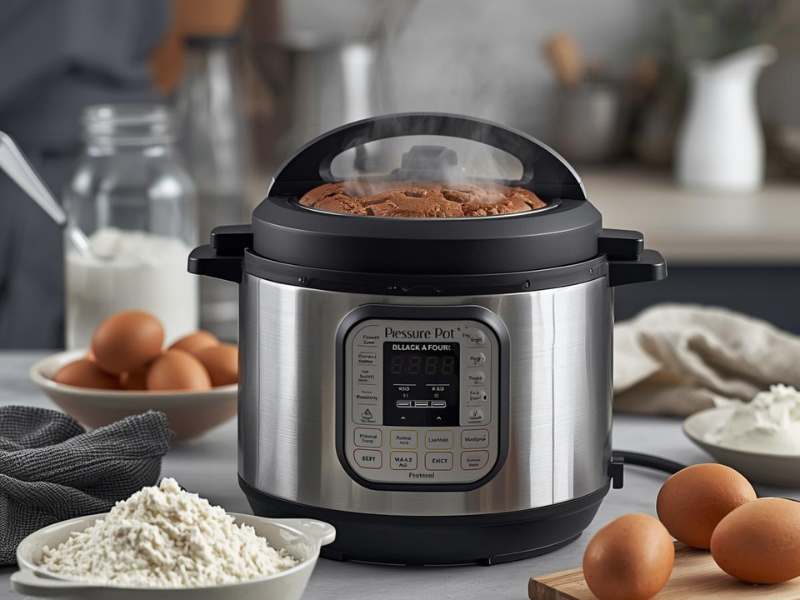
A pressure cooker including the electric Instant Pot variety can produce some genuinely impressive baked goods. The steam environment inside a sealed pressure cooker creates moist, tender results that work particularly well for cakes, puddings, and cheesecakes.
This method is widely used across South Asia where pressure cookers are a staple kitchen tool and oven access is less common. Dense, moist cakes, semolina cakes, and steamed puddings all work beautifully.
How to Bake in a Pressure Cooker
Add about 1–1.5 cups of water to the bottom of the pressure cooker. Place a trivet or rack inside so the baking tin sits above the water, not in it. Grease and fill your tin as normal.
Explore this guide: Baking Measurements Conversion chart
Lower the tin onto the trivet. Seal the lid. For stovetop pressure cookers, cook on medium heat without the weight/whistle — you don’t want the pressure to build fully, just to maintain a steady steam. For the Instant Pot or electric pressure cooker, use the “steam” function or a manual low-pressure setting.
Baking times vary by recipe but most cakes take 25–40 minutes. Release pressure naturally after cooking rather than quick-releasing — the slow release helps the cake settle rather than deflating suddenly.
What Works Best
Chocolate cake, yogurt cake, and other moist, dense cake batters work exceptionally well in the pressure cooker. Cheesecakes are outstanding — the steam environment creates an almost perfectly smooth, crack-free result that rivals a water bath in a conventional oven. Steamed bread and puddings. Basic sponge cakes.
What to Keep in Mind
The steam environment means baked goods come out moist rather than with a dry, crusty exterior. There’s no browning whatsoever — the top of a pressure cooker cake is pale. If you want a browned finish, briefly place the cooled cake under a grill/broiler for a few minutes after baking.
Method 4: Air Fryer Baking
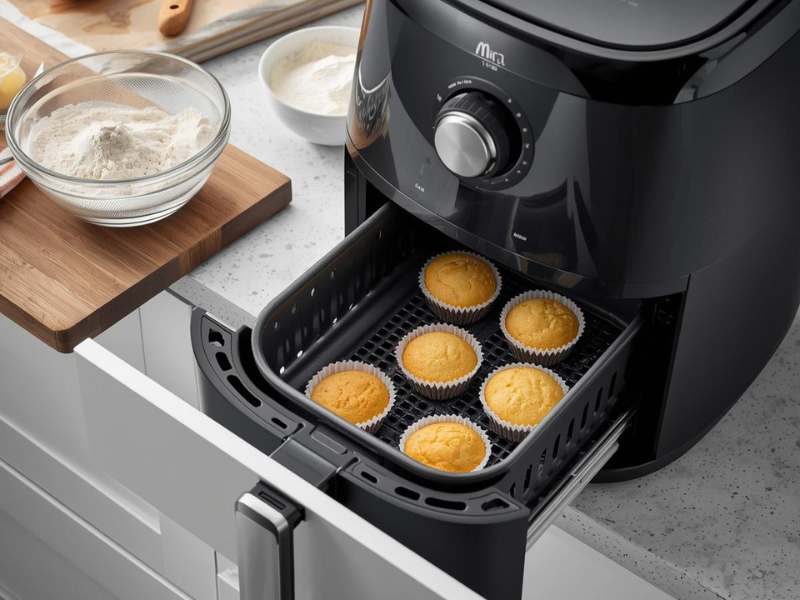
The air fryer has become an extremely popular kitchen appliance, and one of its underused capabilities is baking. An air fryer is essentially a compact, powerful convection oven. It circulates hot air rapidly around food, creating browning and crispness. This makes it quite capable of baking a range of goods. It is a good wa to bake without an oven.
What You Can Bake in an Air Fryer
Cookies work extremely well in an air fryer and are one of the most popular things to bake in one. They brown on the outside, stay chewy or crisp depending on the recipe, and bake much faster than in a conventional oven — usually 6–10 minutes.
Muffins and cupcakes in silicone moulds that fit the air fryer basket are a natural fit. The results are excellent — well-risen, browned, and baked through.
Small cakes in round tins that fit inside the basket bake well, though they’re limited by the size of your air fryer.
Brownies in a small square tin come out with a lovely crisp top and fudgy centre — some people argue air fryer brownies are better than oven brownies.
Bread rolls and small loaves work well. Larger loaves are limited by the basket size.
Donuts, scones, and biscuits bake successfully in the air fryer with good results.
Tips for Air Fryer Baking
Reduce temperature by 15–20°C / 25–30°F compared to your oven recipe — air fryers run hotter and circulate heat more intensely.
Reduce baking time by 20–30% and check early. Air fryer baking is faster than conventional oven baking.
Line the basket with parchment paper cut to fit (don’t let it stick up above the food — it can fly around in the circulating air). Some air fryers come with perforated parchment liners specifically for this.
Don’t overcrowd the basket. Air circulation is what makes the air fryer work — blocking it with too much food undermines the even cooking.
Method 5: Slow Cooker / Crockpot Baking
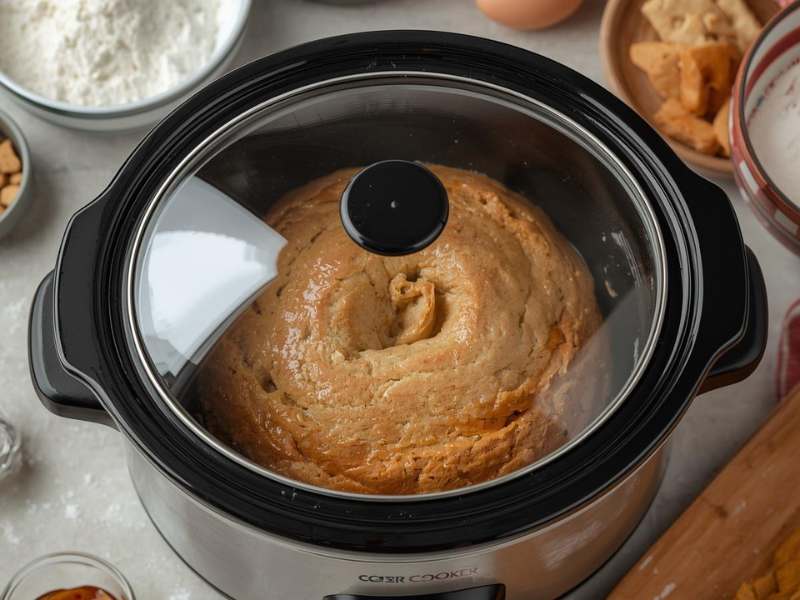
This is one of the ways to bake without an oven. Though this one surprises people, but the slow cooker is genuinely capable of producing moist, tender baked goods. It works similarly to stovetop baking, low, gentle, moist heat — but with even more consistency because the temperature is electrically controlled.
What Works in a Slow Cooker
Banana bread and other quick breads come out wonderfully in a slow cooker — moist and tender throughout. Brownies baked directly in the slow cooker insert (lined with parchment) are famously good — fudgy, dense, and deeply chocolatey. Lemon drizzle cake, chocolate cake, and simple sponges all work. Bread, particularly dense, moist loaves. Cheesecake — baked low and slow in a springform pan placed inside the slow cooker insert, produces an incredibly creamy result.
How to Bake in a Slow Cooker
Line the slow cooker insert with parchment paper or grease it thoroughly. Pour the batter in directly or use a tin that fits inside. Place a double layer of paper towel or a clean folded kitchen towel between the top of the slow cooker and the lid — this absorbs condensation so it doesn’t drip back down onto the bake and make the top wet.
Cook on the HIGH setting for most baked goods. Check after the minimum time by inserting a skewer. Baking times vary significantly — banana bread might take 2–3 hours, brownies 2–2.5 hours.
Don’t lift the lid during baking until it’s close to the minimum time — heat loss in a slow cooker takes much longer to recover than in an oven.
Method 6: Steaming
Steaming as a Baking Method
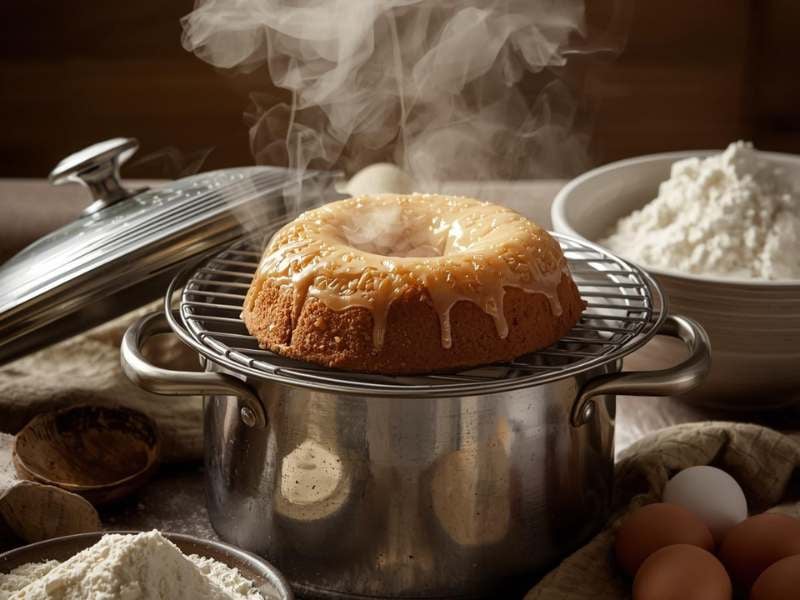
Steaming is one of the oldest and most reliable ways to bake without an oven. A steamed bake is cooked by the heat of steam rather than dry heat, which produces very moist, tender results. Steamed puddings are a classic of British baking, but steaming is used for cakes and breads across many cultures worldwide.
How to Steam Bake
Fill a large pot with about 5cm / 2 inches of water and bring it to a gentle boil. Place a trivet or rack inside so a baking basin or tin sits above the water. Grease your baking basin and fill it to about two-thirds full with batter. Cover the top of the basin tightly with a double layer of foil, pleated in the centre to allow room for the pudding to rise.
Lower the basin into the pot and cover the pot with a lid. Steam on a low simmer, checking the water level every 30 minutes and topping up with boiling water as needed. Steaming times are longer than oven baking — a typical steamed sponge takes 1.5–2 hours.
What Works Best
Classic steamed sponge puddings (treacle, jam, ginger, chocolate). Steamed banana bread. Steamed dumplings. Chinese-style steamed buns. Dense, moist fruit cakes. Rice cakes. All of these are traditionally steamed and produce better results steamed than baked.
Quick Comparison:Which Method Should You Use?
| Method | Best For | Browning? | Time |
|---|---|---|---|
| Stovetop pot | Bread, simple cakes | Minimal | Longer |
| Microwave | Mug cakes, steamed puddings | None | Very fast |
| Pressure cooker | Dense cakes, cheesecake | None | Moderate |
| Air fryer | Cookies, muffins, small cakes | Yes | Faster |
| Slow cooker | Banana bread, brownies | Minimal | Long |
| Steaming | Sponge puddings, dense cakes | None | Long |
If you want browning and the most oven-like results without an oven, the air fryer is your best option. If you want moist, tender cakes with minimal fuss, the pressure cooker or slow cooker are excellent. If you’re working with minimal equipment, stovetop pot baking or steaming require nothing more than a pot and a hob.
Final Thoughts
Baking without an oven is absolutely possible — and not just as a compromise. Some of the methods above produce results that rival or even exceed what a conventional oven produces for certain baked goods. A pressure cooker cheesecake is remarkably good. Slow cooker brownies have devoted fans. Stovetop bread has been feeding families for generations.
Start with the method that suits your available equipment and the type of thing you want to bake. Adjust times and temperatures as you get familiar with each method. And remember — people around the world bake extraordinary things every day without a conventional oven. You can too.