How to Store Baked Goods to Keep Them Fresh Longer
Disclosure: Some of the links in this post are affiliate links. This means if you click on the link and purchase an item, I will receive an affiliate commission at no extra cost to you.
You put real time and effort into baking something good. The last thing you want is to open the container the next day and find your cake has gone dry, your cookies are stale, or your bread is already starting to mold. Knowing how to store baked goods correctly is just as important as knowing how to make them and it’s a skill that most baking guides skip entirely.
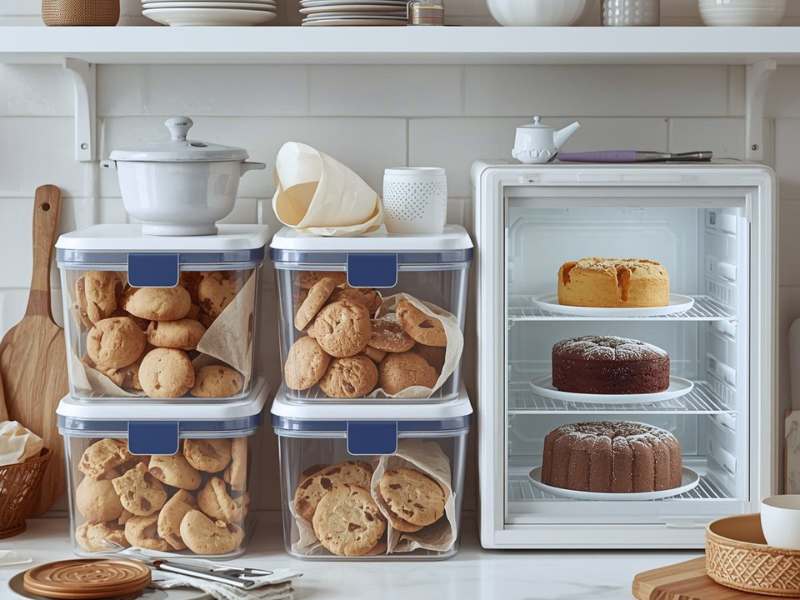
Whether you’re storing baked goods for personal use, prepping ahead for a gathering, or running a small home bakery, getting your storage right means your bakes stay fresh, moist, and delicious for as long as possible. The good news is that baked goods storage doesn’t require special equipment or complicated systems. It mostly comes down to understanding what each type of baked good needs, what damages freshness, and which containers and conditions work best.
This post covers how to store baked goods by type — cakes, bread, cookies, muffins, pastries, and more — with practical, specific guidance for each one and tips on how to keep baked goods fresh for longer than you probably think is possible.
What Actually Makes Baked Goods Go Stale
Before getting into specific storage methods, it helps to understand what causes baked goods to deteriorate in the first place. There are three main culprits.
1. Air and moisture loss
Most baked goods go stale because they lose moisture to the surrounding air. Exposed bread, cake, and cookies dry out relatively quickly when left uncovered. Airtight storage is the single most important factor in keeping baked goods fresh longer.
Open this later: Why Your Cakes Keep Failing (and How to Fix Them)
This is especially true for items with a high sugar content — sugar is hygroscopic, meaning it naturally attracts and holds moisture, but only when the baked good is properly sealed. Leave it exposed and that moisture escapes quickly, leaving you with a dry, crumbly texture that no amount of reheating fully fixes.
2. Too much moisture
The opposite problem — trapped steam and condensation make baked goods soggy, cause mold to develop faster, and ruin textures that are meant to be crisp. This is why you should never seal hot baked goods in airtight containers before they’ve fully cooled.
The steam released from a warm cake or loaf has nowhere to go inside a sealed container, it condenses on the lid and walls and drips back down onto your bake. Always wait until baked goods have reached room temperature before sealing them away. For items with crisp textures, biscotti, shortbread, crackers, even a small amount of trapped moisture is enough to soften them noticeably within hours.
3. Temperature
The fridge is not always a friend to baked goods. While refrigeration slows mold, it also accelerates staling in some items — particularly bread and unfrosted cakes because the cold air draws moisture out faster.
This process is called retrogradation — the starch molecules in baked goods recrystallize more quickly at refrigerator temperatures than at room temperature, which is what makes refrigerated bread go hard and dry so fast. Knowing when to refrigerate and when not to is a key part of storing baked goods correctly.
Learn from this: Common Baking Mistakes and How to Fix Them
Refrigerate only when a recipe contains dairy, cream, or fresh fruit otherwise, room temperature storage in an airtight container is almost always the better choice.
With those principles in mind, let’s go through each category.
How to Store Baked Goods (Cakes)
Cake storage depends heavily on what type of cake it is and what’s in or on it. The same rules don’t apply to all cakes, so it’s worth understanding the differences.
1. Unfrosted Cakes
An unfrosted cake like a plain sponge, a butter cake, a pound cake stores best at room temperature, wrapped tightly in cling film or stored in an airtight container. Kept this way, most unfrosted cakes stay fresh for 2–4 days.
Wrapping the cake while it’s still very slightly warm (not hot — it must be almost fully cooled) helps trap a little moisture inside and keeps the crumb from drying out. If you’re not eating the cake for a couple of days, double-wrap it in cling film.
2. Frosted Cakes
A frosted cake with buttercream or ganache can be stored at room temperature for 1–3 days, loosely covered. Buttercream creates a seal over the cut surfaces that actually helps keep the cake moist.
Cakes frosted with cream cheese frosting, whipped cream frosting, or any cream-based filling must be refrigerated. Store them in an airtight cake box or cover loosely with cling film to prevent the frosting from absorbing fridge odours. Take refrigerated frosted cakes out 30–60 minutes before serving , cold cake has a denser, less pleasant texture than room temperature cake.
3. Cut Cakes
Once a cake is cut, the exposed interior starts drying out quickly. Press a piece of cling film or parchment paper directly against the cut surface before covering the whole cake. This simple step makes a significant difference to how long a cut cake stays fresh.
4. Storing Cakes in the Freezer
Freezing is one of the best ways to store baked goods long-term, and cakes freeze exceptionally well. Unfrosted cake layers can be frozen for up to 3 months. Wrap each layer individually and tightly in cling film, then in a layer of foil, and place in a freezer bag. Defrost at room temperature still wrapped, this prevents condensation forming on the cake surface.
Frosted cakes can also be frozen, though buttercream freezes better than cream-based frostings. Freeze uncovered first until the frosting is solid, then wrap carefully.
How to Store Baked Goods (Bread)
Bread storage is where most people make their biggest mistakes and the fridge is almost always the wrong choice. Refrigerating bread accelerates the staling process because cold temperatures cause the starch molecules in bread to recrystallize faster, making the bread go dry and firm much more quickly than at room temperature.
1. Storing Bread at Room Temperature
For storing bread at home, a bread bin or bread box is the ideal solution. It keeps bread in a slightly humid, dark environment that slows both staling and mould development. A good bread bin can keep a fresh loaf good for 3–5 days depending on the type of bread.
In the absence of a bread bin, wrapping bread in a clean cotton or linen bread bag (not plastic — plastic traps moisture and accelerates mold) and keeping it on the counter works well.
The cut side of a loaf loses moisture fastest, always store bread cut-side down or with the cut surface covered. If you’ve baked a sourdough or artisan loaf with a good crust, storing it cut-side down on a board preserves the crust better than any bag.
2. When Refrigerating Bread Makes Sense
There are a few exceptions where storing bread in the fridge makes sense — primarily in very hot, humid climates where mould develops rapidly at room temperature. If you live somewhere with high humidity and your bread goes mouldy within a day or two at room temperature, brief refrigeration is a practical compromise.
3. Freezing Bread
Freezing is the best long-term storage method for bread by a significant margin. Bread freezes and defrosts beautifully. Slice the loaf before freezing so you can take out individual slices as needed without defrosting the whole thing. Wrap tightly in cling film and then in a freezer bag, or use a dedicated freezer bread bag.
Frozen bread slices can go directly from the freezer into a toaster. Whole loaves defrost at room temperature in a few hours.
How to Store Baked Goods (Cookies)
The best way to store baked goods in the cookie category depends on the type of cookie you’ve made, because crisp cookies and chewy cookies need different conditions to stay at their best.
1. Crisp Cookies
Crisp cookies like shortbread, biscotti, thin ginger snaps need to stay dry. Store them in an airtight container at room temperature, and they’ll stay crisp for up to 2 weeks. Adding a food-safe silica gel packet to the container (the kind that comes in packaging make sure it’s food-safe) absorbs excess moisture and helps maintain crispness even longer.
Never store crisp cookies with chewy cookies in the same container — the moisture from the chewy ones will soften the crisp ones.
2. Chewy Cookies
Chewy cookies — chocolate chip, oatmeal raisin, snickerdoodle — need to retain moisture. Store them in an airtight container at room temperature with a small piece of bread (half a slice is plenty). The cookie will absorb moisture from the bread rather than from the surrounding air, staying soft and chewy for longer. Replace the bread every day or two.
Come back to this: Cute Baking Supplies You Didn’t Know You Needed
Most chewy cookies stay fresh for 3–5 days at room temperature in an airtight container.
3. Freezing Cookies
Both baked cookies and unbaked cookie dough freeze very well. For baked cookies, cool completely, layer between sheets of parchment paper in an airtight container, and freeze for up to 3 months. Defrost at room temperature for about 30 minutes.
For unbaked dough, portion the dough into balls and freeze on a tray, then transfer to a freezer bag. Bake from frozen by adding 2–3 minutes to the usual baking time. This is one of the most useful tricks in storing baked goods — having frozen cookie dough ready means fresh-baked cookies whenever you want them with almost no prep.
How to Store Baked Goods (Muffins and Quick Breads)
Muffins and quick breads (banana bread, zucchini bread, lemon loaf) are among the easiest baked goods to store because they’re naturally moist and keep well.
1. Storing Muffins
The biggest enemy of stored muffins is condensation — the steam trapped inside a warm muffin creates moisture that makes the paper liner and the bottom of the muffin go soggy.
The fix: line your storage container with a layer of paper towel before adding the muffins, and place another layer of paper towel on top. The paper towel absorbs excess moisture and keeps the muffins from going soggy. Store at room temperature for up to 3 days, or refrigerate for up to a week.
2. Storing Quick Breads
Quick breads like banana bread store beautifully. Cool completely, then wrap tightly in cling film or store in an airtight container at room temperature for up to 4 days. Many quick breads actually taste better on day two than day one as the flavours settle.
For longer storage, quick breads freeze very well. Slice before freezing for easy portioning, wrap each slice individually, and freeze for up to 3 months.
How to Store Baked Goods (Pastries)
Pastry is one of the trickier categories when it comes to storing baked goods, because the textures that make pastry good — flakiness, crispness, layering — are also the most vulnerable to poor storage conditions.
1. Flaky Pastry (Croissants, Danish, Puff Pastry)
Flaky pastries are best eaten the day they’re made. The laminated layers that create their texture start to soften quickly once the pastry has cooled, and storing them in an airtight container accelerates this by trapping steam.
If you need to store them overnight, leave them loosely covered at room temperature — a paper bag works better than plastic or an airtight box. Before serving, refresh them in an oven at 180°C / 350°F for 5–8 minutes. They won’t be quite the same as freshly baked, but close.
2. Pies and Tarts
Fruit pies can be stored at room temperature loosely covered for up to 2 days. After that, refrigerate. Custard and cream pies should always be refrigerated and consumed within 2–3 days.
Remove pies from the fridge 30 minutes before serving for better flavour and texture.
3. Unfilled Pastry Shells
Unbaked pastry dough freezes beautifully — wrap tightly and freeze for up to 3 months. Pre-baked (blind-baked) pastry shells can be stored at room temperature in an airtight container for 2–3 days before filling.
How to Store Baked Goods (Brownies and Bars)
Brownies and bar cookies are among the most forgiving baked goods to store. Their high fat and sugar content means they stay moist and fresh longer than most other baked goods.
Store brownies in an airtight container at room temperature for up to 5 days. Keep them in the pan and cover tightly with foil for the first day or two if you haven’t cut them yet — the less surface area exposed, the better.
For longer storage, brownies freeze exceptionally well. Cut into individual portions, wrap each one in cling film, and freeze for up to 3 months. Defrost at room temperature for about an hour or warm briefly in the microwave.
General Rules on How to Store Baked Goods
Always cool completely before storing. This is the most important rule in how to store baked goods. Hot baked goods release steam, and that steam trapped in a container creates condensation that makes everything soggy and speeds up mould growth.
Airtight containers over plastic bags. For most baked goods, a rigid airtight container protects better than a zip-lock bag because it prevents the goods from being compressed or crushed.
Label and date everything you freeze. Frozen baked goods look remarkably similar once wrapped. Label every package with what it is and the date you froze it. Most baked goods are best used within 1–3 months of freezing.
This guide will help you: Baking Station Organisation Ideas That Will Transform Your Kitchen
Don’t mix strong-smelling items. Baked goods absorb odours from their surroundings. Don’t store cakes or cookies near onions, garlic, or strong-smelling foods — they’ll absorb those flavours even through packaging.
The freezer is your best friend. If you bake more than you can eat in a few days, freeze the excess immediately rather than letting it sit on the counter going stale. Most baked goods freeze and defrost beautifully with proper wrapping.
How to Store Baked Goods (Quick Reference Guide)
How Long Do Baked Goods Last?
| Baked Good | Room Temperature | Refrigerator | Freezer |
|---|---|---|---|
| Unfrosted cake | 2–4 days | 5–7 days | Up to 3 months |
| Frosted cake (buttercream) | 2–3 days | 5–7 days | Up to 3 months |
| Frosted cake (cream) | Not recommended | 2–3 days | Not recommended |
| Bread (homemade) | 3–5 days | Not recommended | Up to 3 months |
| Chewy cookies | 3–5 days | 1 week | Up to 3 months |
| Crisp cookies | Up to 2 weeks | Not needed | Up to 3 months |
| Muffins | 2–3 days | Up to 1 week | Up to 3 months |
| Quick breads | 3–4 days | Up to 1 week | Up to 3 months |
| Brownies | 4–5 days | 1 week | Up to 3 months |
| Croissants/flaky pastry | 1–2 days | Not recommended | Up to 1 month |
| Fruit pie | 1–2 days | 3–4 days | Up to 3 months |
Final Thoughts
Good storage is the last step of a good bake, and it’s worth taking seriously. Knowing how to store baked goods properly means less waste, better tasting results days after baking, and more flexibility in when and how much you bake at once.
The core principles are simple: cool completely before storing, use airtight containers, know which items need the fridge and which don’t, and use the freezer generously. Apply those principles consistently and your baked goods will stay fresh far longer than you might expect.