How to Start a Baking Business From Scratch (Step-by-Step Guide)
Disclosure: Some of the links in this post are affiliate links. This means if you click on the link and purchase an item, I will receive an affiliate commission at no extra cost to you.
Starting a baking business from home is one of those ideas that a lot of people have — and far fewer actually follow through on. Not because they can’t bake well enough, but because turning a passion for baking into an actual functioning business feels overwhelming when you don’t know where to start.
This guide on how to start a baking business from scratch breaks the whole thing down into clear, actionable steps. Whether you want to run a small home bakery as a side income or build it into something bigger over time, the steps are the same — you just scale the ambition accordingly.
Come back to this: Essential Baking Tools Every Home Baker Needs
Starting a home baking business doesn’t require a commercial kitchen from day one, a massive startup budget, or years of professional training. What it does require is a solid plan, the right legal foundations, an understanding of your costs and pricing, and a clear idea of who you’re baking for and why they’d choose you.
Let’s walk through it from the beginning.
Step 1: Finding Your Baking Business Niche Before You Launch
Before you think about licences, equipment, or Instagram accounts, start with the most important question: what are you actually going to sell, and who are you selling it to?
This is your baking business niche, and getting clear on it early saves a lot of wasted effort later.
1. What Do You Bake Best?
The most successful home bakery businesses aren’t built on baking a little of everything. They’re built on doing a few things exceptionally well. Start by identifying what you genuinely bake best and what you enjoy making most — because you’ll be making it repeatedly, on order, sometimes under pressure, and it needs to be something you’re both skilled at and not going to resent.
Common home baking business niches include custom celebration cakes, decorated sugar cookies, cupcakes, artisan breads, brownies and bars, macarons, allergen-free or dietary-specific baking (gluten-free, vegan, nut-free), wedding cakes, and cultural or heritage baked goods specific to your background.
2. Who Is Your Customer?
Equally important is knowing who you’re baking for. Are you targeting local families who want a birthday cake without visiting a commercial bakery? Are you targeting the corporate gifting market? Brides planning weddings? Health-conscious consumers looking for allergen-free options?
Your customer determines your pricing, your branding, your packaging, where you market, and what you make. A vague answer like “anyone who likes baked goods” isn’t a customer profile — it’s an avoidance of the question. Get specific.
Step 2: Research the Legal Requirements for a Home Baking Business
This is the step that many aspiring home bakers skip, and it’s one of the most important. Before you sell a single item, you need to understand the legal framework for running a home baking business in your location.
Laws vary significantly by country, state, and region, so you’ll need to research your specific area. This section covers the main categories to investigate.
Take a look at this next: How to Price Your Baked Goods For Profit (Beginner Guide)
1. Cottage Food Laws (USA)
In the United States, most states have cottage food laws that allow individuals to produce and sell certain home-baked goods without a commercial kitchen licence. The specific rules vary by state — some allow direct-to-consumer sales only, some allow farmers’ market sales, some have revenue caps. Research your specific state’s cottage food law before selling anything.
2. Food Hygiene Certification and Registration
In the UK, anyone selling food from home is required to register their home as a food business with their local council — this is free and mandatory. You’ll also need a food hygiene certificate (Level 2 Food Hygiene is the minimum standard) which can be completed online in a few hours for a small fee.
Pin this for reference: Common Baking Mistakes and How to Fix Them Fast
In other countries, similar food safety registration and certification requirements exist. Research what’s required in your specific region and complete any necessary certifications before you start a home bakery business.
3. Allergen Labelling
When asking the question of how to start a baking business you look at this. Allergen labelling is a legal requirement in most countries for any food sold to the public. You must clearly identify the 14 major allergens including gluten, dairy, eggs, nuts, and soy — in your baked goods either on the label or verbally when selling in person.
This isn’t optional. Getting allergen information wrong has serious consequences for customers and significant legal consequences for your baking business. Take this seriously from day one.
4. Insurance
Consider getting public liability insurance for your home baking business. This protects you if a customer claims to have been made ill or suffered an allergic reaction from your product. Many home baker insurance policies are affordable (under $100/year in many regions) and provide important protection.
Step 3: Set Up Your Home Bakery Workspace
You don’t need a commercial kitchen to start a baking business from home, but you do need a workspace that’s clean, organised, hygienic, and capable of producing consistent output.
1. Assess Your Current Kitchen
Most home kitchens can function as a small baking business workspace with some organisation and a few equipment upgrades. The key requirements for a home bakery kitchen are a clean, food-safe work surface, adequate storage for ingredients and equipment, a reliable oven, and sufficient space to work efficiently.
If you have a separate preparation area away from where pets or young children can access, that’s ideal. Food safety regulations in many areas require that your baking preparation is separated from regular household activity as much as possible.
2. Essential Equipment for Starting a Baking Business
The essential baking equipment you need depends on what you’re making, but for most home baking businesses the essentials are:
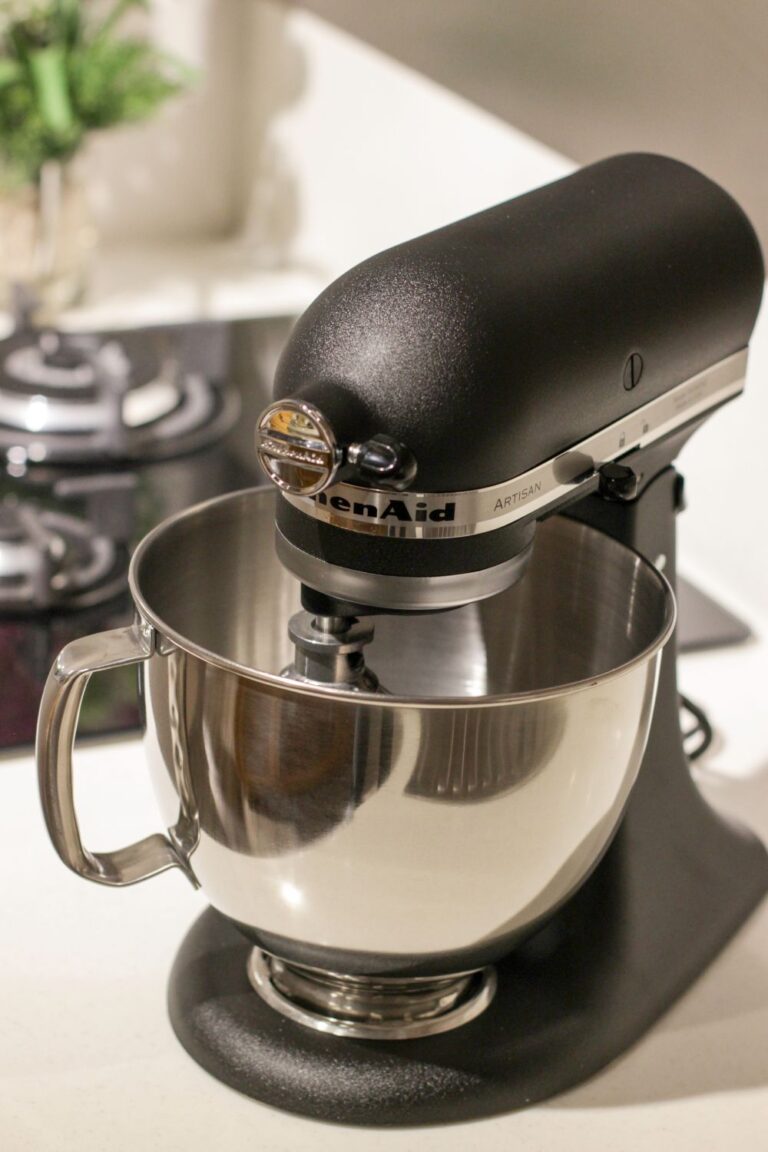
A reliable stand mixer — this is one investment worth making early. For a baking business producing regular orders, a hand mixer simply won’t hold up to the volume. A quality stand mixer is a business tool, not a luxury.
Commercial-grade baking sheets — heavier, more durable, and more consistent than basic home baking sheets.
A digital kitchen scale — non-negotiable for a baking business. Every recipe must be replicated exactly, and weighing ingredients is the only reliable way to do this.
Proper storage containers for ingredients — airtight, labelled, and organised so you can work efficiently.
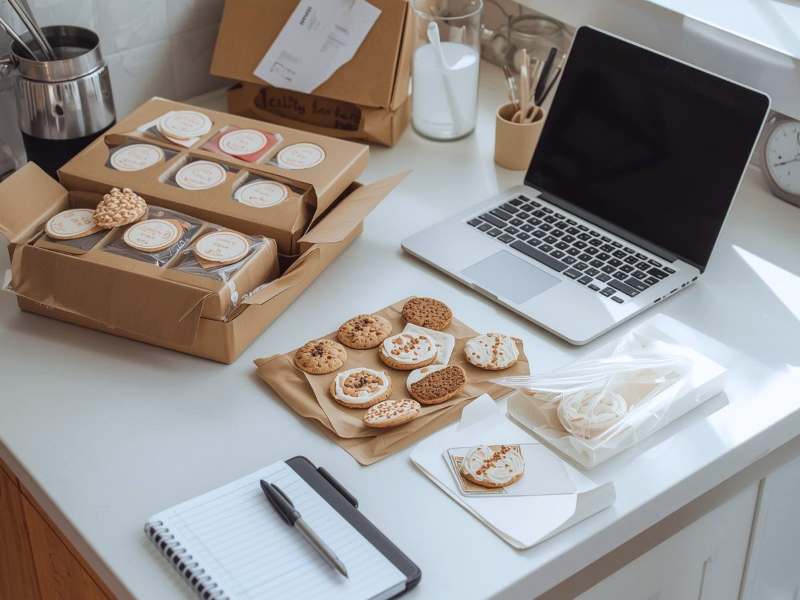
Packaging supplies — boxes, bags, tissue paper, labels. Your packaging is part of your product.
A food thermometer — for checking internal temperatures of baked goods and tempering chocolate.
3. Keeping Your Home Bakery Hygienic
Food safety hygiene in a home bakery is non-negotiable. Establish clear protocols: wash hands before every baking session, keep pets out of the kitchen during food production, use separate utensils for allergen-containing and allergen-free products if you offer both, and clean and sanitise work surfaces before and after every session.
Document your cleaning and hygiene routines. If you’re ever inspected by a food safety authority, having evidence of your hygiene practices is important.
Step 4: Develop Your Menu and Price Your Products
Your menu is your product range, and in a small home baking business, a focused menu is almost always better than a wide one.
1. Start Small and Focused
Resist the urge to offer everything. A focused menu of 5–8 well-executed products is more manageable, more profitable, and easier to market than a sprawling list of 30 items. You can always expand later once you have the operations, the customer base, and the confidence.
Choose products that you make consistently well, that have a reasonable shelf life for delivery or collection, that use overlapping ingredients (reducing waste and ingredient cost), and that suit your target customer.
2. Price Your Products Correctly
Pricing your baked goods correctly is one of the most critical steps in how to start a baking business that actually makes money. Every product on your menu should be priced using a proper cost calculation that accounts for ingredients, overhead, your labour, and a profit margin.
The formula: total costs (ingredients + packaging + overhead + labour) multiplied by a 2.5–3x markup gives you a sustainable selling price. Never price based on guesswork, and never price below your actual costs just to attract customers.
For a detailed walkthrough of how to price homemade baked goods, see our full guide on baking business pricing.
This is worth a look: Dream Baking Kitchen Inspiration (Pinterest – Worthy Setup)
Step 5: Handle the Money Side of Your Baking Business
Even a small home baking business needs some financial organisation from the start. Setting up proper financial records from day one is far easier than trying to reconstruct them later.
1. Open a Separate Bank Account
Keep your baking business money completely separate from your personal finances. Open a dedicated bank account for your home bakery — even a basic free account works. All income goes in, all business expenses come out. This makes bookkeeping straightforward and is essential if you ever need to report income for tax purposes.
2. Track Every Expense
Keep receipts for every business purchase — ingredients, packaging, equipment, insurance, certifications, website costs. Record these in a simple spreadsheet. These are your business expenses and they reduce your taxable profit.
3. Understand Your Tax Obligations
Income from a baking business is taxable in most countries. Research the tax rules for small businesses and self-employment income in your country or state. In many places there’s a minimum threshold below which small income isn’t taxable — but you need to know what that threshold is and track your income accordingly.
If your baking business grows to a significant income, consider consulting an accountant who specialises in small businesses.
Step 6: Build Your Brand and Online Presence
You can be the best baker in your area, but if nobody knows you exist, you won’t get orders. Building a visible, appealing brand presence is an essential part of how to start a baking business that actually gets customers.
1. Choose a Business Name
Your baking business name should be memorable, easy to spell, relevant to what you do, and available as a social media handle. Check that your chosen name isn’t already being used by another local business. Keep it simple — your name plus “bakes” or “bakery” is a perfectly good starting point.
2. Create a Simple Visual Brand
You don’t need to hire a designer to have a professional-looking brand. Choose two or three brand colours that reflect your style, a simple font or two, and a basic logo. Free tools like Canva make this accessible to anyone. Use these elements consistently across all your platforms — social media, packaging labels, invoices.
3. Set Up Social Media — Especially Instagram and Facebook
For a home baking business, Instagram and Facebook are the most important platforms. Instagram is visual and baking content performs exceptionally well there. Facebook is where local community groups and word-of-mouth referrals happen.
Post consistently. Share your bakes, your process, behind-the-scenes content, and customer testimonials. Engage with comments and messages promptly. Your social media is your storefront — keep it active and professional.
4. Get Listed Locally
Register your home bakery on Google My Business so local people can find you when they search for bakers in your area. Join local Facebook community groups and introduce your business. List on local directories. Ask early customers to leave reviews.
Word-of-mouth is the most powerful marketing for a home baking business, and it starts with making every early customer experience genuinely excellent.
Step 7: Handle Orders, Delivery, and Customer Communication
As orders start coming in, having a simple but consistent system for managing them protects both you and your customers.
1. Use an Order Form
Create a simple order form — even a Google Form works — that captures all the information you need for every order: customer name, contact details, what they want, quantity, any dietary requirements or allergens, delivery or collection preference, and the date needed.
Having this information documented prevents misunderstandings and gives you a record of every transaction.
2. Set Clear Lead Times
Baking to order takes time. Set clear lead times — the minimum notice you need to fulfil an order — and communicate these upfront on your social media and to every enquiring customer. Most home bakers require at least 48–72 hours notice for standard orders and 1–2 weeks for custom cakes.
Dive into this next: How to Store Baked Goods to Keep Them Fresh Longer
Don’t accept orders you can’t fulfil to the standard you want to maintain. Turning down an order is better than delivering something substandard under pressure.
3. Take Deposits for Custom Orders
For any custom order — especially cakes — take a non-refundable deposit (typically 30–50% of the total price) at the time of booking. This protects you from last-minute cancellations after you’ve already purchased ingredients and committed your time.
Have a simple cancellation policy written down and shared with customers when they book.
Step 8: Grow Your Home Baking Business Over Time
Once your home bakery is up and running and generating regular orders, the question becomes: how do you grow it thoughtfully without burning out?
1. Focus on Consistency First
Before expanding your menu, your customer base, or your production volume, focus on doing what you already do to a consistently high standard. Consistent quality is what builds reputation. Reputation is what drives word-of-mouth. Word-of-mouth is the most powerful growth driver a small baking business has.
2. Increase Prices as You Improve
As your skills develop, your reputation grows, and demand for your baked goods increases — your prices should increase accordingly. Don’t stay at your introductory prices forever. Review your pricing every 6 months and adjust to reflect your actual costs and market position.
3. Consider Cottage Bakery Markets and Pop-Ups
Farmers’ markets, craft fairs, and food markets are excellent opportunities for a home baking business to reach new customers, build brand recognition, and generate significant one-day income. Research local markets in your area and apply to participate. Market stalls also give you direct customer feedback that’s invaluable for refining your menu and positioning.
4. Know When to Upgrade
If demand consistently outgrows what you can produce in your home kitchen, it may be time to consider renting a commercial kitchen by the hour, partnering with a local café or restaurant for kitchen access, or investing in a larger home kitchen setup. Growing a baking business gradually and deliberately is far more sustainable than overcommitting and underdelivering.
Step-by-Step Checklist for Starting a Baking Business From Home
Use this as your action list for launching your home baking business:
Before you launch:
- Define your niche and target customer
- Research cottage food laws / food business regulations in your area
- Complete required food hygiene certification
- Register your food business with local authorities if required
- Get public liability insurance
- Set up a dedicated business bank account
- Create your menu and price every item properly
- Source packaging and test your presentation
At launch:
- Choose your business name
- Create a simple visual brand
- Set up Instagram and Facebook business accounts
- Create an order form
- Set clear lead times and a cancellation/deposit policy
- Tell everyone you know — family, friends, neighbours, community groups
- Take your first orders and over-deliver on quality
Ongoing:
- Post content consistently on social media
- Track all income and expenses
- Review pricing every 6 months
- Collect and share customer reviews
- Continuously improve your most popular products
- Explore local markets and pop-up opportunities
Final Thoughts
Knowing how to start a baking business from scratch is about far more than knowing how to bake well — though that’s obviously the foundation. It’s about building a small operation that’s legal, financially sound, well-branded, and set up to grow sustainably.
The steps in this guide are designed to take you from idea to functioning home bakery without skipping the foundations that determine whether a baking business succeeds or stays a dream. Work through them in order, don’t rush the legal and financial setup, price your products properly from the start, and focus relentlessly on quality and consistency.
Starting a home bakery business is genuinely achievable. Thousands of home bakers around the world have built meaningful, profitable businesses from their own kitchens — with exactly the same starting point you have right now.
Start where you are. Start with what you have. But start.