10 Best Stand Mixers Every Home Baker Should Have
Disclosure: Some of the links in this post are affiliate links. This means if you click on the link and purchase an item, I will receive an affiliate commission at no extra cost to you.
A good stand mixer can completely change the way you bake at home. It saves your hands from endless mixing, handles thick dough with less effort, and makes tasks like whipping cream or egg whites much easier. The challenge comes when you start comparing dozens of models that look similar but perform very differently.
Some mixers work beautifully for everyday cakes and cookies, while others handle heavy bread dough better. Bowl capacity, mixing performance, speed control, attachments, countertop space, noise, and price can all affect your experience. Your overall baking setup matters too, especially when you are building your collection of Essential Baking Tools Every Home Baker Needs (with budget options).
This guide brings together 10 of the best mixers every home baker should have, with practical differences that matter when you are spending your money. You will find options for beginners, frequent bakers, small kitchens, large batches, bread lovers, and shoppers looking for better value. The goal is simple: help you find a mixer that fits the way you actually bake, rather than choosing one based only on popularity.
10 Best Stand Mixers Every Home Baker Should Have
1. KitchenAid Artisan Plus Stand Mixer — Best Overall
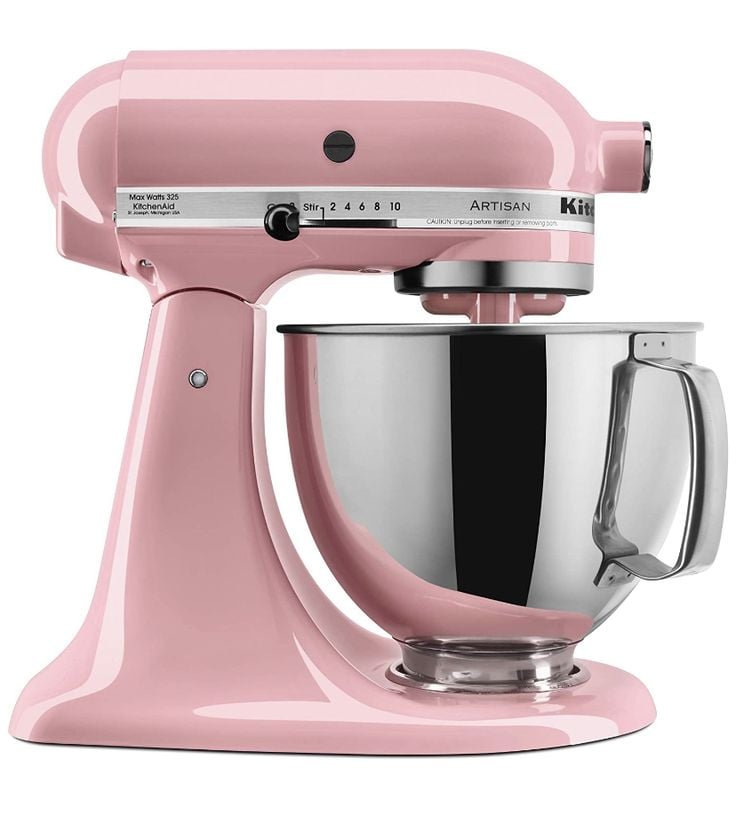
The KitchenAid Artisan Plus is one of the easiest recommendations for an everyday home baker. The updated model keeps the familiar tilt-head design while adding useful features that make regular baking more convenient.
Good Housekeeping’s 2026 testing named the Artisan Plus its best overall stand mixer after testing it with cookie dough, cakes, whipped cream, and bread. Testers particularly liked its performance with dense oatmeal chocolate chip cookie dough and its ability to whip cream quickly.
The newer model also includes an integrated bowl light, 11 speeds, a soft-start function, a flex-edge beater, dough hook, wire whip, and pouring shield. The slow-start feature helps reduce the cloud of flour that can happen when you begin mixing dry ingredients.
One important point deserves attention. The head lock could become unlocked during stiff dough mixing. That does not make the mixer a poor choice, but serious bread bakers should consider a bowl-lift model instead.
Best for: Everyday cakes, cookies, frosting, whipped cream, and moderate bread baking.
Keep in mind: Stiff dough can expose the limitations of a tilt-head design.
If you are still building your baking equipment collection, pair your mixer research with these Essential Baking Tools Every Home Baker Needs (with budget options).
2. Cuisinart SM-50TQ Precision Master — Best Value
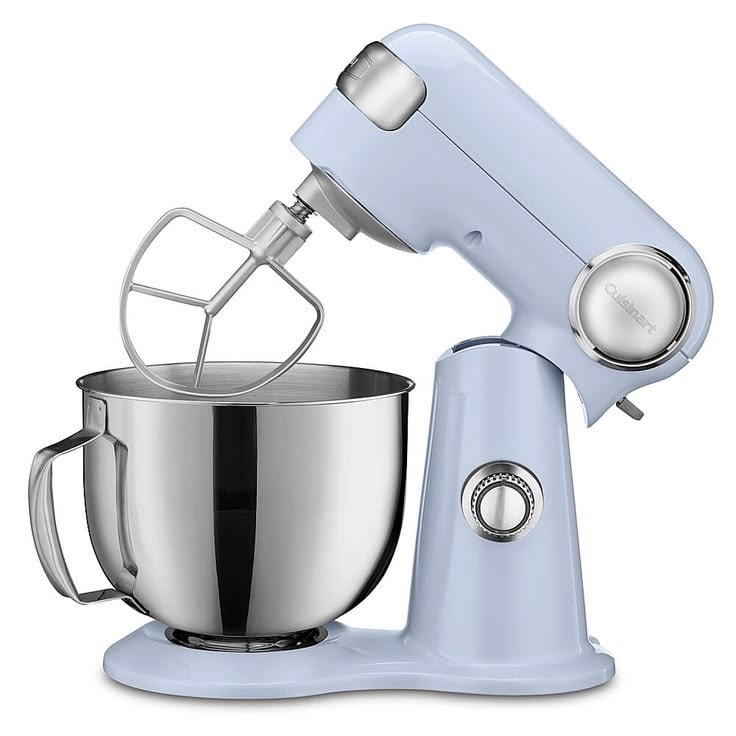
The Cuisinart Precision Master makes a strong case for bakers who want solid performance without automatically choosing the most recognizable brand.
Good Housekeeping currently lists the SM-50TQ as its best-value stand mixer. Its testing found that the machine performed well across everyday baking tasks, while its 5.5-quart bowl, 12 speeds, and included attachments give home bakers plenty of flexibility.
It comes with a flat beater, whisk, dough hook, and splash guard. The guard includes a pour spout, which can make adding ingredients less messy.
The Cuisinart also offers a useful alternative to KitchenAid for shoppers who care more about function than brand recognition. Good Housekeeping found that it handled tasks from gentle mixing through stiffer dough, although the head may move during particularly stiff bread recipes.
That makes this mixer especially appealing to a baker who wants versatility without paying primarily for aesthetics or a large accessory ecosystem.
Best for: Budget-conscious home bakers who still want a full-size mixer.
Keep in mind: Heavy dough can make the head move.
3. Breville Bakery Chef — Best for Feature-Loving Bakers
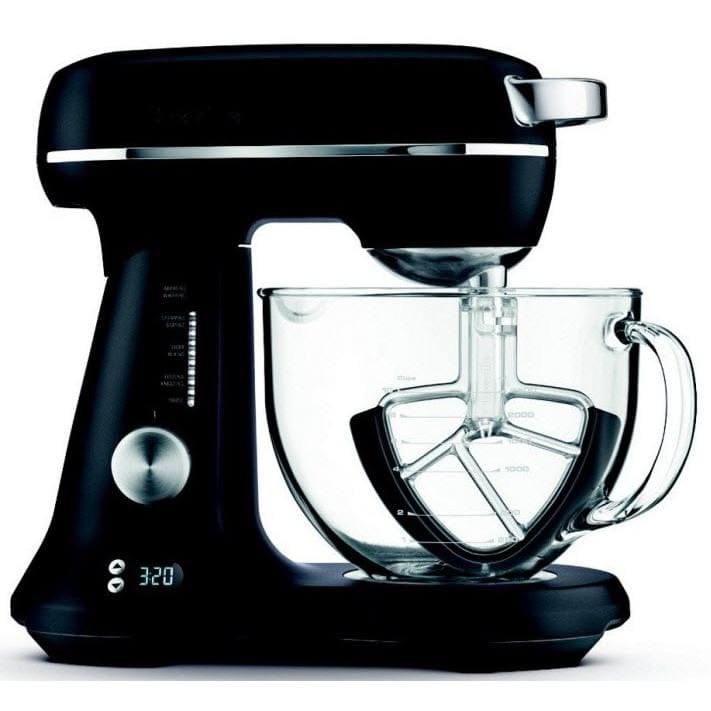
Breville takes a different approach with the Bakery Chef. Instead of simply competing on motor power and bowl size, it adds features that address everyday baking frustrations.
The built-in digital scale lets you weigh ingredients directly into the bowl. That can save time and reduce dirty dishes, especially for bakers who prefer measuring ingredients by weight.
The mixer also includes a scraper beater designed to keep ingredients moving from the sides of the bowl. Recent 2026 reviews praise those features as genuinely useful rather than unnecessary extras.
Another useful feature is the built-in timer. Bakers who frequently make bread, whipped cream, meringues, or recipes requiring specific mixing times can benefit from having timing built directly into the machine.
The Bakery Chef uses a tilt-head design, so it does not offer the same heavy-dough stability as a large bowl-lift machine. One recent hands-on review also found it better suited to general baking than very stiff, high-volume dough work.
Best for: Frequent bakers who appreciate thoughtful features and precision.
Keep in mind: Serious bread bakers may prefer a bowl-lift or bread-focused machine.
Accurate measurements matter even more when you bake frequently, so keep a reliable Baking Measurements Conversion Chart nearby.
4. NutriMill Artiste Kitchen Electric Stand Mixer
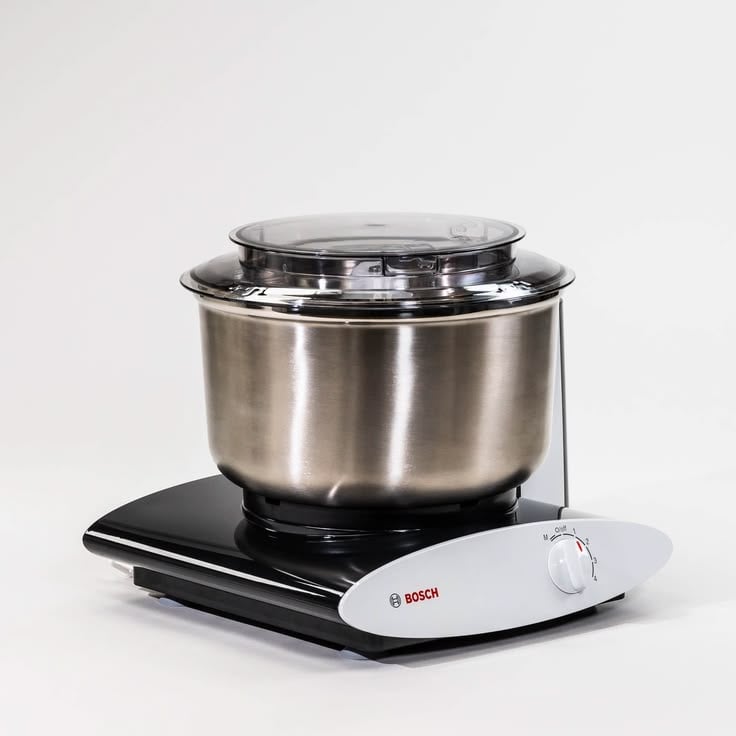
The NutriMill Artiste Kitchen Electric Stand Mixer looks very different from the classic KitchenAid-style mixer. Its open bowl and bottom-drive design make it particularly interesting for people who bake large quantities of bread.
Recent reviews consistently highlight its ability to handle large and stiff dough batches. The machine uses a bottom-mounted motor rather than placing the motor in a tilt head, which changes how the mixer handles heavy dough.
The large bowl can accommodate significantly more dough than many conventional tilt-head mixers. That makes the NutriMill especially appealing to households that bake several loaves at once.
It does have tradeoffs.
The open-bowl design feels different from traditional stand mixers. It can also feel less convenient for tiny batches because the larger bowl may not be ideal for small amounts of ingredients. Some reports rates the Universal Plus highly for overall performance, while noting its open-bowl design and attachment capabilities.
Best for: Bread bakers, large batches, and frequent dough making.
Keep in mind: It is less conventional and less appealing for very small mixing jobs.
If bread is a major reason you want a stand mixer, also read this Beginner’s Guide to Baking Bread at Home.
5. Martha Stewart 5.3QT Tilt-Head Stand Mixer
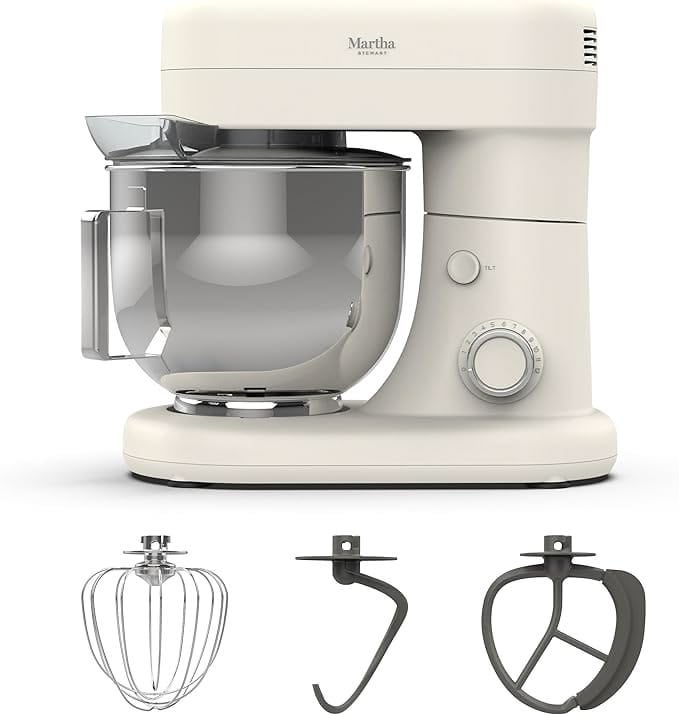
This Martha Stewart 5.3-quart stand mixer is a practical option for everyday home baking. It features 12 speeds, a stainless steel bowl, and a tilt-head design that makes adding ingredients and removing the bowl easier.
The included dough hook is useful for bread dough, while the multiple speed settings give you better control for mixing cakes, cookies, whipped cream, and other recipes.
Its 5.3-quart capacity also gives home bakers enough room for most everyday batches without taking up the space of a larger professional mixer.
Heavy dough can expose weaknesses in any mixer, so understanding common problems through 19 Bread Baking Mistakes That Ruin Homemade Loaves can help you use your machine more effectively.
6. KitchenAid Artisan Mini — Best for Small Kitchens
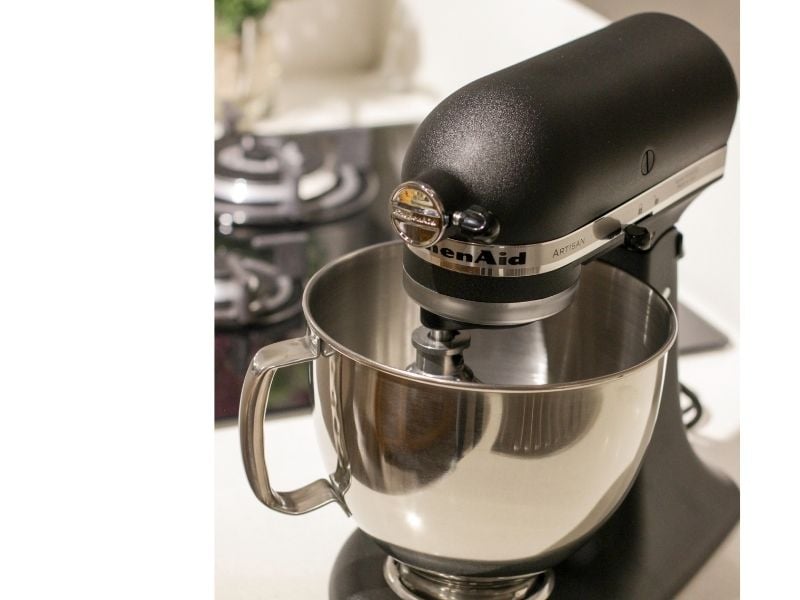
The KitchenAid Artisan Mini solves a simple problem: some home bakers want a genuine stand mixer without giving up a large section of their countertop.
Despite its smaller 3.5-quart capacity, it retains 10 speeds and the three standard attachments found on larger KitchenAid models. It also works with many of the brand’s optional attachments.
The smaller bowl makes this mixer especially appealing for single batches, small households, and occasional bakers.
However, capacity matters.
Someone regularly making large cookie batches or multiple loaves will probably outgrow it quickly.
This is a mixer for convenience rather than maximum production.
Best for: Small kitchens, apartment bakers, and smaller households.
Keep in mind: The smaller bowl limits large-batch baking.
If your kitchen has limited counter space, these Small Kitchen Baking Ideas for Limited Spaces can help you create a more practical setup.
7. KitchenAid Professional 600 Series — Best for Large Batches
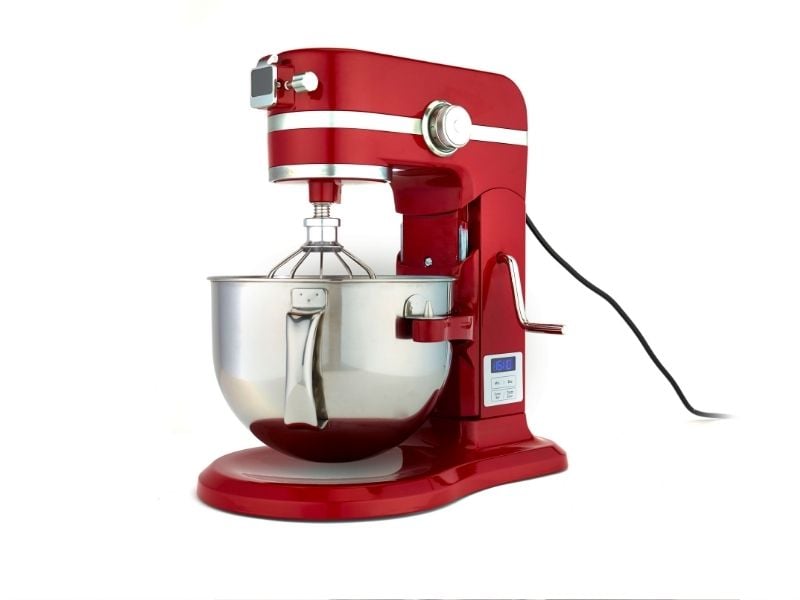
The KitchenAid Professional 600 takes the classic KitchenAid concept and gives it more capacity and a bowl-lift design.
The bowl-lift format provides more stability than a tilt-head when working with larger or heavier mixtures. That makes this type of mixer particularly attractive to serious home bakers who regularly make bread dough, large cookie batches, or multiple baked goods.
It has been historically recommended for its powerful mixing capabilities, while recent hands-on reviews continue to position it as a machine for serious baking rather than casual use.
The larger size comes with an obvious downside.
It takes more counter space and weighs more than compact tilt-head models.
You also need enough work surface around the machine to comfortably add ingredients and remove the bowl.
Best for: Frequent bakers, large batches, and heavier dough.
Keep in mind: It can feel excessive for occasional or small-batch baking.
Large-batch baking also requires good ingredient management, making How to Organize Your Baking Ingredients Like a Pro useful for serious home bakers.
8. GE 7-Quart Smart Mixer with Auto Sense — Best Smart Mixer
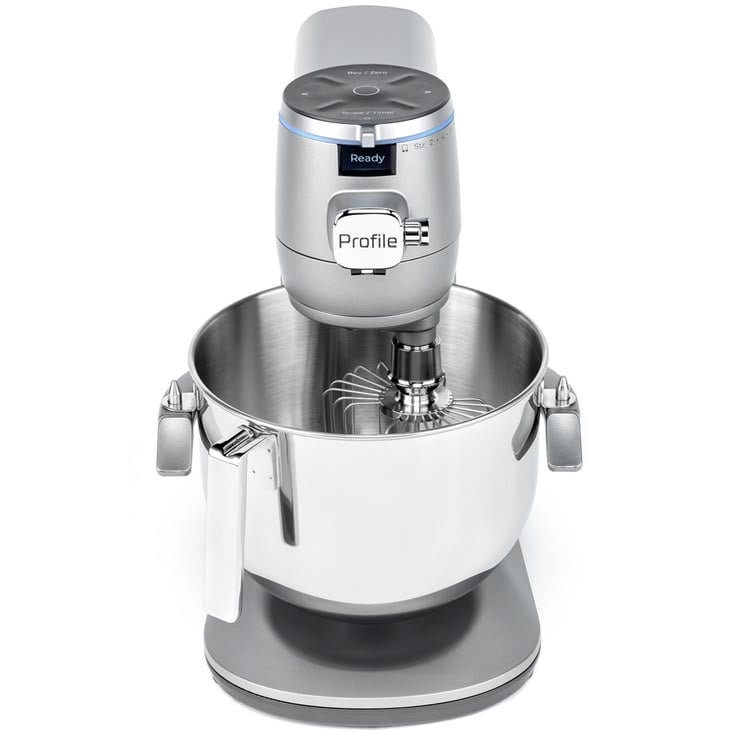
The GE 7-Quart Smart Mixer stands out because it brings technology into a category that has traditionally focused on mechanical simplicity.
This model has been listed among its top stand mixers because of its highlightsand smart features. Its 7-quart capacity also gives it an advantage for larger batches.
The appeal here goes beyond having a large bowl.
A smart mixer can help reduce guesswork during mixing, which may appeal to bakers who like more controlled processes.
The larger capacity also makes sense for families and frequent bakers.
Still, smart features do not automatically make a mixer better.
A baker who wants simple controls and minimal electronics may prefer a traditional KitchenAid or Cuisinart.
Think about how you actually bake before paying extra for technology.
Best for: Tech-loving bakers and larger households.
Keep in mind: The extra technology may not matter to bakers who prefer simple machines.
Good technique still matters more than smart features, so keep practical resources like Baking Tips That Instantly Improve Your Results in your baking toolkit.
9. Smeg Forte Stand Mixer — Best for Style
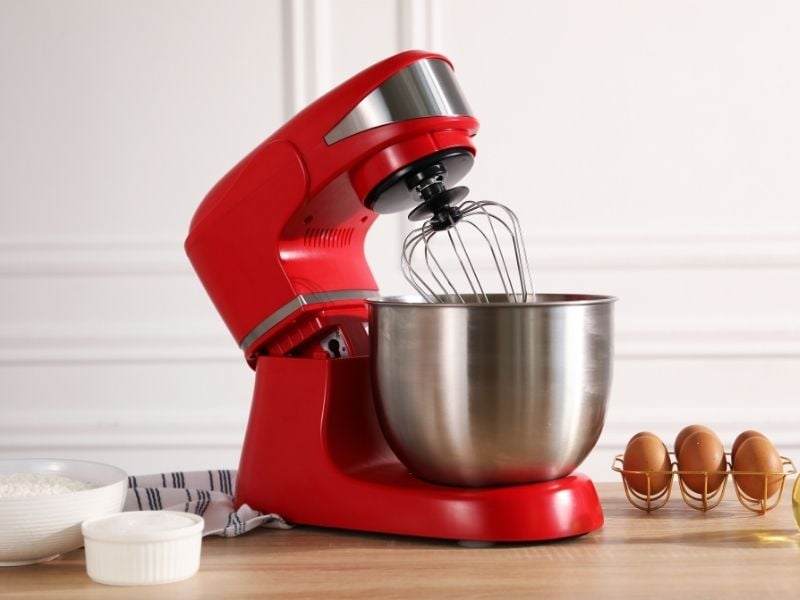
The Smeg Forte is for the baker who wants a mixer that looks like part of the kitchen design.
Its retro-inspired appearance immediately separates it from more utilitarian machines. The 2026 Forte also brings a 750-watt motor, 10 speeds, and upgraded attachments.
Performance has improved, and recent testing found the machine sturdy and capable across everyday baking tasks. Tom’s Guide rated it highly after testing, while Forbes Vetted also found the newer Smeg models impressive during home testing.
Still, the Forte is not an automatic winner.
WIRED found some concerns around the plastic outer shell, bowl movement at higher speeds, and long-term durability. The publication also concluded that its performance did not consistently justify choosing it over similarly priced alternatives.
That makes the Smeg a particularly interesting choice for people who care about aesthetics and everyday baking rather than maximum heavy-duty performance.
Best for: Design-conscious home bakers.
Keep in mind: The price reflects the design, and heavy-duty performance has stronger competitors.
If the look of your kitchen matters to you, these Aesthetic Baking Setup Ideas For Beginners can help you create a cohesive baking space.
10. Hamilton Beach Electric Stand Mixer — Best Beginner Budget Option
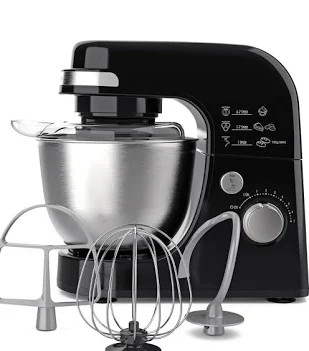
The Hamilton Beach Electric Stand Mixer is worth considering when you want to start using a stand mixer without committing to a premium machine.
Good Housekeeping currently names a Hamilton Beach model its best stand mixer for beginners. Its appeal comes from straightforward operation and a lower barrier to entry compared with premium machines.
This type of mixer makes sense for someone who mainly bakes cakes, cookies, frosting, and lighter doughs.
You should set realistic expectations, though.
A budget mixer does not need to compete with a $500-plus machine to be useful. It simply needs to handle the baking tasks you actually perform.
If you bake several loaves every weekend, a larger and more powerful machine will make more sense.
For occasional cakes and cookies, the Hamilton Beach can offer enough assistance without taking over your budget.
Best for: Beginners and occasional bakers.
Keep in mind: Serious bakers may eventually want more capacity and power.
Before investing in any mixer, make sure you understand the fundamentals. This guide to Baking Terms Explained (Fold, Cream, Knead & More For Beginners) can help beginners get comfortable with common techniques.
What Should You Look for in a Stand Mixer?
A stand mixer can be a major investment, so look beyond color and brand name.
Bowl Capacity
Think about the quantity you usually make.
A smaller bowl works well for single batches and smaller households.
A larger bowl becomes valuable when you make multiple loaves, large cookie batches, or large quantities of frosting.
Do not automatically choose the biggest bowl available. Large bowls can make small quantities harder to mix properly.
Open this: Baking Content Ideas for Instagram, Pinterest, and TikTok
Mixing Performance
A mixer needs to combine ingredients thoroughly.
Pay attention to how well it handles thick cookie dough, cake batter, whipped cream, and bread dough.
Those tasks reveal different strengths.
A mixer that handles whipped cream beautifully may still struggle with stiff dough.
Dough Handling
Bread bakers should pay particular attention to dough performance.
Heavy dough places more strain on a mixer than cake batter.
A bowl-lift or bottom-drive machine may suit frequent bread baking better than a lightweight tilt-head.
Your flour choice also affects dough behavior, so understanding Types of Baking Flour and When to Use Them can improve your results.
Speed Control
More speeds do not automatically mean better performance.
What matters is whether the mixer gives you useful control at low and high speeds.
Slow speeds help incorporate dry ingredients without creating a flour cloud.
Medium speeds work well for many batters.
Higher speeds help with whipping cream and egg whites.
Read this: Baking Hobby Ideas That Make Baking Even More Fun
Attachments
Most mixers include a paddle, whisk, and dough hook.
Some brands offer much larger attachment ecosystems.
KitchenAid has a particularly broad range of optional attachments, which can turn the mixer into a multifunctional kitchen appliance.
Consider those extras only if you will actually use them.
Counter Space
Measure your available space before buying.
A large mixer can become frustrating if you have to move it every time you bake.
Weight also matters.
Some heavy-duty models work best when they remain permanently on the counter.
A compact model may suit a baker who needs to store the mixer after every use.
Ease of Cleaning
Look at the bowl, attachments, controls, and areas where flour or batter can collect.
A mixer that takes several minutes to clean after every bake may become annoying.
Scraper beaters can reduce the need to stop and scrape the bowl, while dishwasher-safe attachments can simplify cleanup.
It also helps to understand common baking problems through Common Baking Mistakes and How to Fix Them Fast.
How to Get Better Results From Your Mixer
Start with the recommended speed.
Do not immediately turn the mixer to high speed because faster does not always mean better.
Scrape the bowl when your recipe requires it.
Even mixers with excellent planetary action can leave ingredients around the edges during certain mixtures.
Avoid overmixing cake batter.
Mix until the ingredients combine according to the recipe rather than continuing simply because the mixer makes it easy.
For bread dough, watch the dough rather than relying only on the clock.
Texture and elasticity can tell you more than a fixed mixing time.
Save this: The Most Common Beginner Baking Questions Answered
A Stand Mixer Should Fit Your Baking Life
The best stand mixer is not necessarily the most expensive model.
It is the machine that handles the recipes you actually make.
A beginner who mostly makes cookies may not need a massive bowl-lift machine.
A bread baker producing several loaves each weekend needs something very different.
A small-kitchen baker may value compactness more than raw power.
A design-focused baker may happily spend more for a mixer that stays visible on the countertop.
Your choice should reflect those priorities.
For beginners still developing their skills, these Baking Confidence Tips for Complete Beginners can help you get more comfortable before taking on complicated recipes.
Final Thoughts
A stand mixer can become one of the most useful appliances in a home baker’s kitchen, but choosing the right one takes more than picking the most popular brand.
The KitchenAid Artisan Plus stands out as an excellent all-around choice. Cuisinart offers impressive value, while Breville brings clever features that frequent bakers may appreciate.
Bread enthusiasts should look closely at the Bosch Universal Plus and Ankarsrum. Small kitchens have the KitchenAid Artisan Mini, while large-batch bakers may prefer a bowl-lift model.
The Smeg Forte brings strong visual appeal, and Hamilton Beach offers a more approachable starting point for beginners.
Before buying, think about your recipes, batch sizes, kitchen space, budget, and baking frequency.
Most importantly, choose a mixer that solves a real problem for you.
A good stand mixer should make baking easier, not simply take up space on your counter.