How to Know When Your Cake Is Properly Baked
Disclosure: Some of the links in this post are affiliate links. This means if you click on the link and purchase an item, I will receive an affiliate commission at no extra cost to you.
Let me tell you about the time I pulled a cake out of the oven, sliced right into the middle, and watched the whole centre collapse into a puddle of raw batter. The timer had gone off. It looked golden on top. I was convinced it was done. It absolutely was not.
That moment taught me something I wish someone had told me at the very beginning. A cake that looks ready on the outside can still be completely raw on the inside. The colour on top, the time on the timer, even the smell coming from the oven — none of these alone can tell you whether your cake is actually done. You need to know the right signs to look for, and more importantly, you need to know why they matter.
Knowing when your cake is done is honestly one of the most practical skills in baking. It sounds so simple, but it is the thing that stands between a perfect bake and a disappointing one. It is also something that takes a little learning, because every oven is different and every cake has its own cues. If your cakes have been failing in ways you cannot quite explain, Why Your Cakes Keep Failing and How to Fix Them is a really honest and helpful read alongside this one.
The good news is that once you know what to look for, checking when your cake is done becomes quick, easy, and totally reliable. You will never have to second-guess yourself again. And understanding how heat works inside your cake during baking makes all of this click even faster. Understanding Baking Temperatures for Better Results covers exactly that, and it pairs really well with everything you are about to learn here.
Why Knowing When Your Cake Is Done Matters So Much
A cake pulled from the oven too early collapses. The structure never fully set because the proteins in the eggs never finished coagulating and the starches never fully gelatinised. The outside looks done because browning happens at the surface. But the interior is still a warm, wet batter that cannot support its own weight once the heat of the oven is removed.
A cake left in too long dries out. The moisture that was keeping the crumb tender continues to evaporate past the point where it was perfectly balanced. The edges pull away too aggressively. The crumb becomes tight and crumbly instead of soft and moist. The flavour flattens out. A cake that could have been excellent becomes merely acceptable because it stayed in five or ten minutes too long.
Knowing when your cake is done protects all the effort that went into making it. The time spent creaming the butter, folding in the flour carefully, preparing the tin correctly — all of that matters most in the final minutes in the oven. Getting this part right is how you make all the earlier work count. It also connects deeply to understanding how heat behaves inside your oven. Understanding Baking Temperatures for Better Results explains exactly how oven heat drives the processes that tell you when your cake is done, and understanding it makes every test in this post make much more sense.
How to Know When Your Cake Is Properly Baked
There are several ways to know when your cake is properly done and they include:
The Toothpick Test: The Classic Method That Still Works
The toothpick test is the most widely known method for checking when your cake is done, and it works because it gives you direct access to the interior of the cake rather than relying on surface appearance.
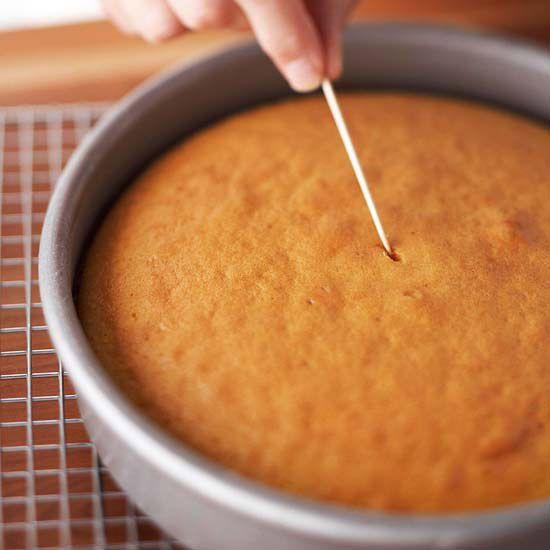
Insert a clean toothpick, a thin skewer, or a cake tester into the centre of the cake at the deepest point. The centre is the last part to cook through, so testing there gives you the most accurate information. Pull it out and look at what comes with it. A clean toothpick with nothing on it means the batter has fully set and the cake is done. A few moist crumbs clinging to the toothpick means the cake is done and at its best. Wet batter smearing the toothpick means the cake needs more time.
The distinction between clean, moist crumbs, and wet batter is worth paying attention to. A toothpick that comes out completely clean with no crumbs is slightly past ideal for moist cakes like chocolate cake or carrot cake. These cakes are at their best with just a few moist crumbs attached. The crumbs indicate that the structure has set but the moisture is still perfectly distributed. For lighter sponge cakes and vanilla cakes, a completely clean toothpick signals proper doneness without concern.
A common mistake is testing the wrong spot. Testing near the edge of the cake gives a false reading because the edges always cook faster than the centre. Testing in a crack that formed on the surface also gives a false reading because you are sampling a spot that was exposed directly to the oven heat. Always test the very centre, going straight down to the deepest point of the tin. Common Baking Mistakes and How to Fix Them Fast covers this exact kind of testing error alongside all the other small mistakes that produce inconsistent results in ways that are hard to trace without guidance.
The Press Test: What Your Fingertip Can Tell You
The press test is less talked about than the toothpick method, but experienced bakers use it constantly. It works because the texture of the surface of a fully baked cake tells you a great deal about what is happening underneath.

Press the centre of the cake gently with your fingertip. Do not press hard. A light touch is enough. A cake that is done springs back immediately and completely when you lift your finger. The surface feels set and slightly firm. A cake that is not yet done leaves an indentation. The surface feels soft and yielding and does not spring back. That soft, giving feeling indicates that the internal structure has not fully set.
This test works because the surface of the cake responds to how developed the internal protein and starch network is. When the egg proteins have coagulated and the starches have gelatinised fully, the entire crumb structure has set from the inside out. That set crumb gives the surface its springiness. When those processes are incomplete, the crumb beneath the surface is still fluid enough to compress without resistance.
Practising this test on cakes you already know are done teaches your fingertips what the right feeling is. Over time, you develop an instinctive sense of when a cake is done just from that single touch. It becomes as natural as checking whether something on the stovetop is hot. This kind of sensory baking skill builds quickly and it is one of the most satisfying things about developing real baking confidence. The Science of Baking Made Simple for Beginners explains the underlying chemistry behind what you are feeling when you press a cake, which deepens your understanding of why this test works every time.
The Edge Pull Test: What the Sides of the Tin Tell You
Looking at where the cake meets the sides of the tin is another reliable indicator of when your cake is done. This method works alongside the toothpick and press tests rather than replacing them, and it gives you useful information before you even open the oven fully.
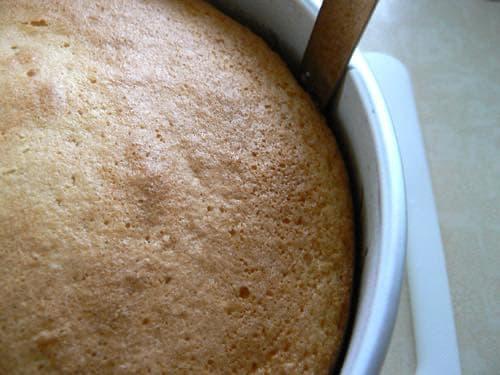
A properly baked cake pulls away from the sides of the tin slightly as it cools in the final minutes of baking. The edges of the cake contract slightly as moisture evaporates and the structure sets. You will see a small gap between the edge of the cake and the inner wall of the tin. This is a positive sign that the cake has baked through to the edges and is beginning to set.
A cake that has not yet reached this stage sits flush against the sides of the tin with no gap. The batter is still moist enough and still expanding enough to press against the tin wall. Seeing no gap does not mean the cake is underdone on its own, but seeing a clear gap combined with a positive toothpick result gives you strong confirmation that your cake is done.
Be aware that this test varies with tin material. Dark non-stick tins produce more aggressive pull-away because they run hotter and bake the edges more quickly. Light aluminium tins produce a more moderate pull-away. Silicone tins sometimes show very little pull-away even when the cake is properly done because the flexible sides move with the cake rather than staying still. Learn how your own tins behave and you will read this cue more accurately over time. Essential Baking Tools Every Home Baker Needs covers the effect of different tin types and materials on baking results so you always know what to expect from the equipment you have.
The Internal Temperature Test: The Most Reliable Method
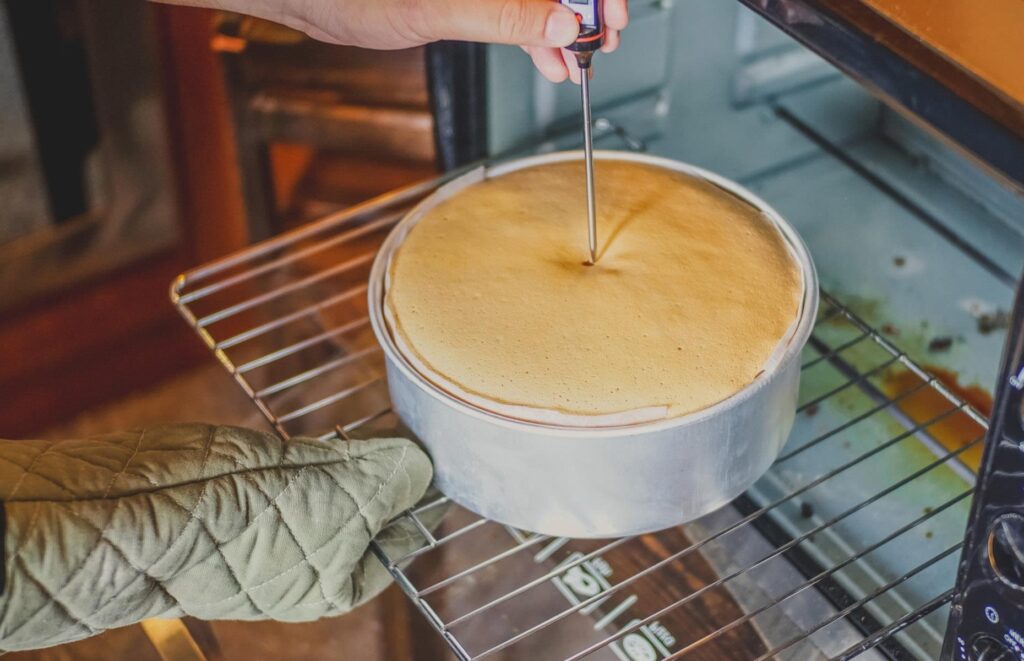
Using a thermometer to check the internal temperature of your cake is the single most accurate method for knowing when your cake is done. It removes all ambiguity. It works regardless of oven variability, tin material, or recipe type. And it is faster than most people expect.

Most standard cakes, including vanilla sponge, carrot cake, butter cake, and most layer cakes, are done when the internal temperature at the centre reaches 200 to 210 degrees Fahrenheit. At this temperature, the egg proteins have fully coagulated and the starches have completely gelatinised. The structure is set. The cake is done.
Dense, moist cakes with a higher fruit or vegetable content, like banana cake or carrot cake, sometimes read slightly lower, around 195 to 200 degrees Fahrenheit, at their optimal point. This is because the added moisture from the fruit or vegetables slows the temperature rise inside the cake. Rich chocolate cakes and flourless cakes often read at the lower end of this range too, because they are meant to retain more moisture in their finished texture.
Insert the thermometer into the dead centre of the cake, going as deep as possible without touching the bottom of the tin. The bottom of the tin is in contact with the hottest surface in the oven and will give a falsely high reading. Hold the thermometer steady for a few seconds until the reading stabilises. Then pull it out and read. If the temperature is in range, your cake is done. If it is below the target, give it a few more minutes and test again. Baking Measurements Conversion Chart is worth keeping nearby during this kind of precision baking because converting temperatures between Fahrenheit and Celsius accurately matters when you are following recipes from different regions.
The Sound Test: Listening for Doneness
The sound test is the least talked about method for knowing when your cake is done, but bakers who use it swear by it. It works because the internal structure of a cake changes the sound it makes when you tap it.

Gently tap the top of the cake with your knuckle or the flat of a spoon. A cake that is done produces a slightly hollow sound. The sound indicates that the crumb inside has fully set and contains no more significant liquid batter. A cake that is not yet done produces a heavier, denser sound. The liquid batter still present inside absorbs the sound rather than letting it resonate.
This test takes some practice to calibrate because the difference between the two sounds is subtle at first. Tapping a cake you know is fully baked trains your ear to recognise the hollow resonance. Tapping one that came out underbaked teaches you what the dense sound feels and sounds like by comparison. Once you have heard both, you can use this as a quick secondary check alongside the toothpick or press test.
The sound test is particularly useful for loaf cakes and pound cakes where the toothpick test can be harder to reach the true centre reliably. It is also useful for cakes with a domed top, where finding the exact centre is not always straightforward. Used alongside other tests, it adds another data point that helps you feel completely confident that your cake is done before you take it out. Why Your Cakes Keep Failing and How to Fix Them discusses how underbaking shows up in finished cakes and what distinguishes it from other types of failure, which helps you understand what you are listening and looking for.
The Visual Cues: What a Done Cake Looks Like
Visual cues alone are not enough to confirm when your cake is done, but they are the first thing you check and they help you decide when to begin the other tests. Learning to read what your eyes are telling you is part of building real baking instinct.

Colour is the first visual cue. A properly baked cake develops a golden to deep golden colour on the top surface. The shade depends on the recipe. A vanilla sponge turns a pale, even gold. A chocolate cake deepens to a rich brown. A carrot cake takes on a warm amber. What you are looking for is even colour across the whole top surface without pale patches in the centre. Pale patches in the centre often indicate that area is still underbaked.
The surface should also look set and dry rather than shiny and wet. A wet, shiny surface on a cake in the oven means the top layer of batter is still liquid. A matte, set surface means the top has dried and firmed. This visual shift usually happens a few minutes before the cake is fully done, so seeing a matte surface tells you to start testing with your toothpick or thermometer.
Rising pattern also tells you something. A cake that is done has usually finished its rise and sits evenly in the tin. A cake that is still actively rising is not yet done. You can sometimes see this by watching through the oven glass rather than opening the door. Opening the oven door too early collapses the rise by allowing cold air in before the structure has set enough to hold itself. Baking Ingredients Explained connects the visual changes you see in a baking cake directly to what the ingredients are doing at each stage, which makes observing your bake feel much more informative and intuitive.
The Smell Test: What Your Nose Knows
The smell coming from your oven changes as a cake progresses through baking. Experienced bakers often know when their cake is done before they even open the oven, partly from the smell and partly from the combination of all the other cues they have learned to read together.
In the early stages of baking, a cake smells of raw batter warming up. There is a faint, neutral scent that comes from the fat and flour beginning to heat. As the Maillard reaction begins on the surface, the smell shifts to something richer and more developed. Vanilla notes deepen. Buttery caramel undertones emerge. The smell becomes recognisably of baked cake rather than batter.
When a cake is done, the smell is full and developed without any raw or eggy undertones. If you open the oven and still detect a slightly raw, wet-batter smell, the cake is likely not yet done. A smell that is deep, rich, and fully developed tells you the surface reactions have completed and the interior is very likely done too.
The smell of burning or scorching is obviously a warning sign in the other direction. If you detect any sharpness or bitterness in the oven smell before the timer goes off, check your cake immediately. Your oven may be running hot, the cake may be in the wrong rack position, or the tin material may be conducting heat more aggressively than the recipe accounted for. Baking Station Organisation Ideas That Will Transform Your Kitchen includes guidance on organising your baking space so that everything you need to respond quickly to these moments is always exactly where you need it.
Timer Reliability: Why the Clock Is Not Enough on Its Own
Baking timers are starting points, not finish lines. Every recipe gives a time range for a reason. The lower end of the range assumes ideal conditions. The upper end accounts for the natural variation in ovens, ingredients, and environment.
Your oven is almost certainly not perfectly calibrated. Research consistently shows that most home ovens run between 25 and 50 degrees hotter or cooler than the dial indicates. An oven running 25 degrees hot will bake your cake significantly faster than the recipe suggests. An oven running cool will need more time. Neither situation means the recipe is wrong. It means your oven is yours and you need to know how it behaves.
Ingredient temperature also affects timing. A batter made with cold eggs and cold milk goes into the oven cooler than one made with room temperature ingredients. It takes longer for the interior to reach the temperature needed for the structure to set. Even two batters made from the same recipe will behave differently in the oven depending on how warm the ingredients were when they went in.
Start checking your cake a few minutes before the earliest time the recipe suggests. Use the tests in this post to assess where it is. If it passes, take it out. If it needs more time, check again every three to five minutes. Never walk away and assume the timer is right. Your job in those final minutes is to read the cake, not the clock. How to Read a Baking Recipe Correctly Before You Start explains how to interpret timing instructions in recipes so you approach every bake with the right expectations from the beginning.
What Happens When You Take the Cake Out Too Early or Too Late
Understanding the consequences of each mistake reinforces why knowing when your cake is done is so important. Both underbaking and overbaking have specific, recognisable results, and knowing what to look for helps you diagnose what went wrong so you can fix it next time.
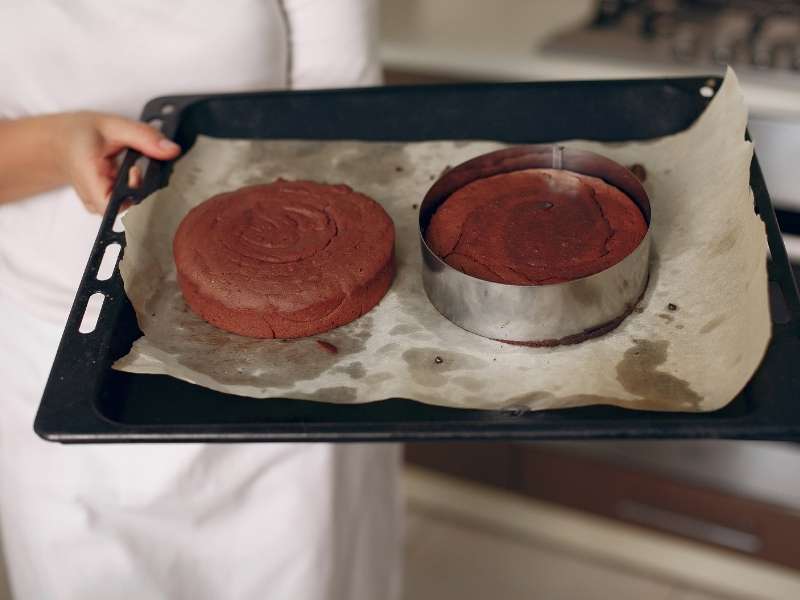
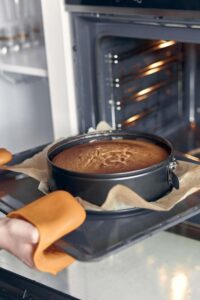
Taking a cake out too early produces a cake that sinks in the centre as it cools. This happens because the structure never fully set. The heat of the oven was supporting the risen batter, but once that heat is removed, the still-liquid centre collapses under the weight of the sides. The cake looks fine in the oven and falls the moment you take it out. A dense, gummy texture in the centre of a sliced cake also indicates underbaking. The batter cooked partway through but never fully gelatinised or set.
Leaving a cake in too long produces dry edges, a tight crumb, and sometimes a darkened surface. The moisture that gave the crumb its tenderness has evaporated past the ideal point. The edges of the cake become noticeably harder than the centre. The flavour also suffers because the caramelisation that adds complexity starts to tip into bitterness if it goes too far. Knowing when your cake is done protects that ideal window between perfectly baked and starting to overbake.
Both of these problems are also affected by how you store the cake once it is out of the oven. Cooling it incorrectly can make an underbaked cake feel worse than it is, and overbaked edges become even drier if stored improperly. How to Store Baked Goods to Keep Them Fresh Longer gives you the full picture for cooling and storing every type of bake so nothing deteriorates after it leaves the oven.
Putting All the Tests Together
Using multiple tests together gives you the most reliable read on when your cake is done. No single method is infallible on its own. Combining two or three gives you confidence that what you are seeing is accurate.
A practical approach is to check the visual cues first when you are a few minutes away from the end of the timer. Look at the colour. Check whether the surface looks set. See if the edges have pulled away from the tin. If the visual cues look positive, do the press test. If the cake springs back cleanly, do the toothpick test to confirm. If the toothpick comes out with a few moist crumbs and the temperature reads in range, your cake is done. Take it out.
This sequence takes less than a minute. It becomes faster and more automatic with every cake you bake. Eventually you reach a point where you barely think about the individual steps. You just open the oven, read the cake, and know. That is what baking instinct actually is. It is not a mysterious talent. It is the accumulation of practised observation, and it grows every time you pay attention.
Knowing when your cake is done is one of those foundational skills that improves everything else around it. It makes you more confident with unfamiliar recipes. It helps you troubleshoot more accurately. It means you stop relying on luck and start relying on knowledge. The Ultimate Beginners Guide to Baking pulls all of these foundational skills together in one place and makes a genuinely useful companion for anyone building their baking knowledge from the ground up.
As your baking grows more consistent and your results more reliable, you might start thinking about where your skills could take you next. Building confidence in the kitchen is often the first step toward something bigger. How I Turned Baking Into a Side Hustle is an honest, encouraging read about what becomes possible when you take your baking seriously and build the kind of consistent results that others notice and want.